Procedure
Breast Augmentation in Cyprus
Surgery to increase breast volume and alter shape, using implants, the patient's own fat, or a combination of the two. The choice between them, and of implant plane and incision, follows from tissue quality rather than from preference alone.
Procedure facts
- Duration
- 30–40 minutes unless combined with another procedure
- Anaesthesia
- General
- Hospital stay
- Day surgery
- Pre-admission tests
- Blood tests and electrocardiogram
- Downtime
- 1–2 weeks
- Driving
- A few days
- Exercise
- 2 months
- Final result
- 3–4 months
Overview
Breast augmentation increases volume and changes shape, either with an implant, with the patient’s own fat, or with both.
Breast size and shape change over time with pregnancy, hormonal change, weight loss and ageing. Augmentation is used to enlarge small, asymmetrical or deflated breasts and to restore volume and shape that has been lost.
Most of the consultation is spent on the tissue rather than on the implant: skin quality, the amount of breast tissue covering the device, the position of the fold beneath the breast, and existing asymmetry. Those findings determine the implant type, size, plane and incision.
Implant plane
Implant placement should suit the patient’s anatomy and their aesthetic goals. There are two principal planes.
Under the chest muscle (sub-muscular or dual plane) Suited to patients with little breast tissue and thin skin over the breast. The additional muscle cover makes the implant edge less apparent, and there is a clearer separation between breast tissue and implant for mammography.
Behind the breast tissue (sub-glandular) Suited to patients with thicker skin and adequate breast tissue. Recovery after sub-glandular placement is often less uncomfortable and faster.
Incision
Inframammary fold (IMF) The most common approach. It has been shown to carry a lower risk of complications such as capsular contracture and loss of nipple sensation, and gives direct access to the muscle and to the pocket into which the implant is placed.
Periareolar Placed at the junction between the darker areolar skin and the lighter skin of the breast. It is associated with higher rates of capsular contracture and, potentially, reduced nipple sensation compared with the IMF incision.
Transaxillary A small incision within the armpit, through which the implant is placed using a camera and specialised instruments. The thin skin of the axilla forms natural creases and shadows that conceal the scar.
Hybrid augmentation
Hybrid breast augmentation combines an implant with autologous fat transfer. Fat is harvested from an area where the patient stores it — most often the abdomen or the inner or outer thighs — collected in a sterile container, then washed and strained before being transferred to small syringes and injected into the breast.
Fat is used to camouflage contour irregularities and to add soft-tissue cover. In patients with very little breast tissue it acts as a layer between the implant and the overlying skin, which reduces the chance of visible rippling.
What the operation involves
Anaesthesia is administered by a consultant anaesthetist. The incision is made in the inframammary fold, around the areola or within the axilla, planned around the size and type of implant and the patient’s anatomy. The implant is placed under the chest muscle or behind the breast tissue according to the tissue findings. The incision is then closed in layers.
The technique aims to preserve the normal physiology of the breast, including the ability to breastfeed after surgery.
Recovery
Breast augmentation is a day case. Most patients are walking unaided a few hours after surgery and feel able to leave the house within a day or two.
During the first 48 hours a raised temperature, fatigue and soreness are common. The breasts may look larger than expected; most of that early swelling settles quickly. A feeling of tightness across the chest is usual as the skin adjusts.
A compression bra and chest band are worn immediately after surgery. They limit movement of the implant and maintain the pocket that has been created. Arms and elbows should be kept close to the sides and lifting avoided until permitted.
Light everyday activity resumes gradually from the first day after surgery. Most patients return to work and to physical activity after two weeks, beginning with lower-body exercise and building up to upper-body work.
The result continues to improve as the implants settle into position. Results are long-term, though changes in body weight and pregnancy may alter the appearance of the breast.
After surgery — do
- Rest and take pain medication as instructed
- Wear the support garments the surgeon has specified
- Sleep on your back
- Begin mild activity as soon as you are able
- Attend follow-up appointments
- Arrange help at home for the first few days
- Perform the recommended exercises and massage the breasts as instructed
- Protect the breasts from pressure and compression
After surgery — do not
- Lift, push or undertake intense activity for several weeks
- Ignore the post-operative instructions
- Smoke
- Remove the surgical tape yourself
- Expose scars to the sun
- Sleep on your side or front
- Wear ordinary bras
- Touch the incisions
- Take blood thinners
Who it suits
Augmentation suits healthy patients with realistic expectations who are not satisfied with the size or shape of their breasts. Assessment covers the breasts, skin condition, muscle tone and body proportions, together with general medical history and allergies. Previous breast surgery, family history of breast disease, pregnancy, childbirth and lactation should all be disclosed.
Most candidates are patients who have not achieved the breast size and shape they want, and patients whose breasts have changed after pregnancy and breastfeeding. Breast development should be complete before surgery is considered.
In selected cases, augmentation or implant exchange may be considered after breast cancer surgery to restore volume and balance.
Where the surgery takes place
Dr. Stavrou performs breast augmentation in accredited medical centres in Cyprus, Greece and Malta. After surgery the patient is transferred to the recovery area and monitored by the clinical team.
Risks and considerations
Breast augmentation is a well-established procedure, but it carries the general risks of surgery and risks specific to implants: capsular contracture, implant rupture, infection, and changes in sensation. Implants are placed under sterile conditions with individualised planning for position and symmetry. Breast Implant–Associated Anaplastic Large Cell Lymphoma (BIA-ALCL) is a rare immune-related condition linked primarily to textured implants; it is discussed at consultation alongside implant type, chest wall anatomy and long-term monitoring.
Before and after
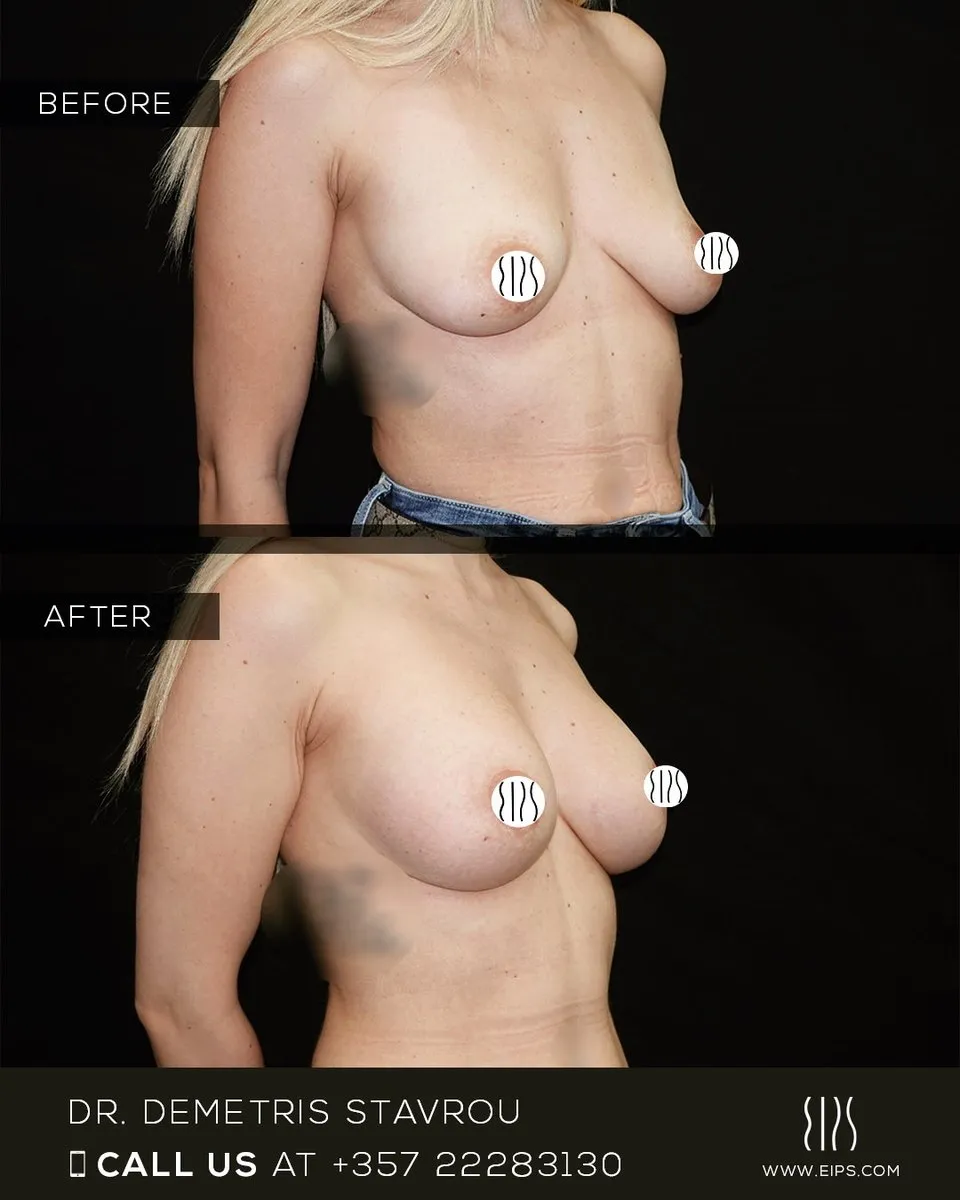
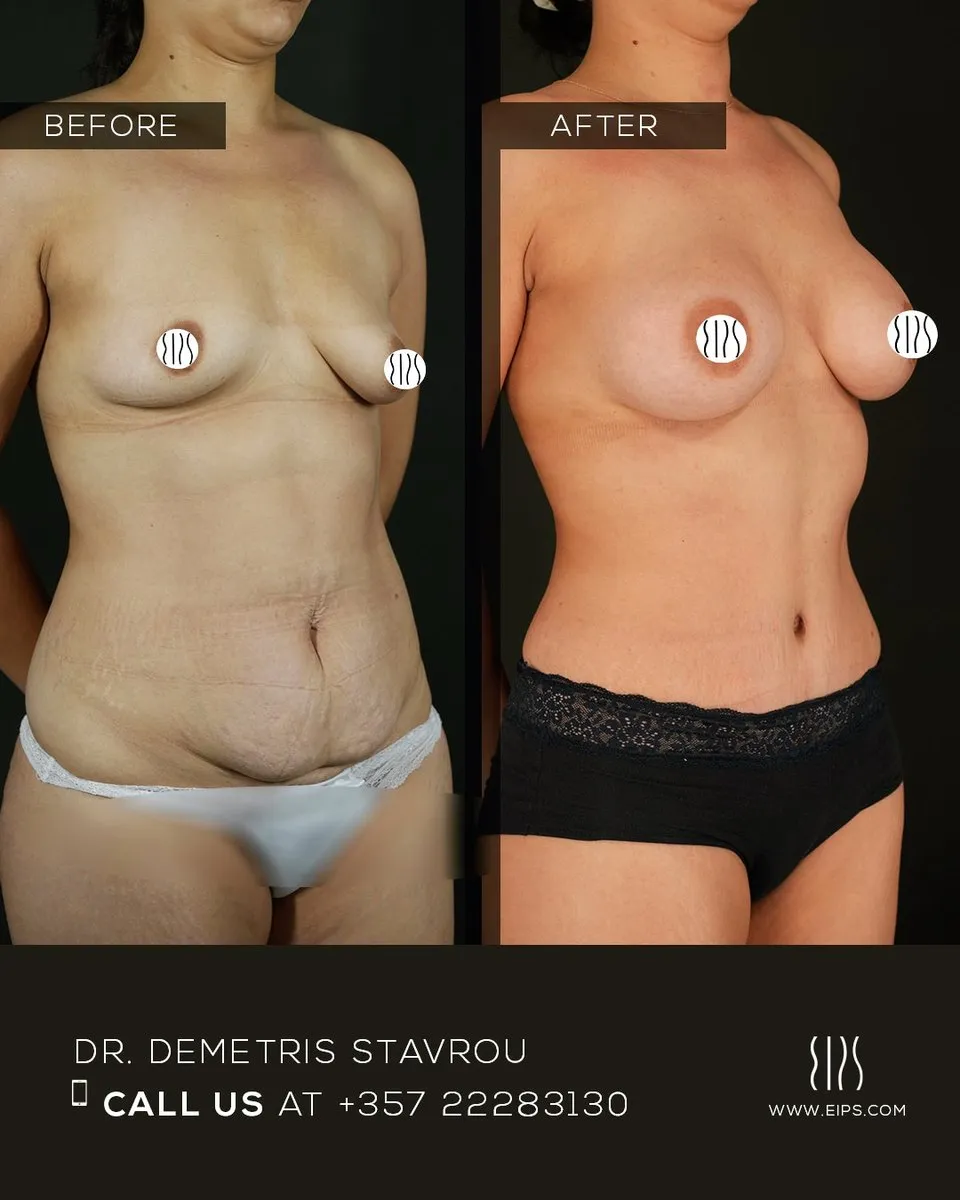
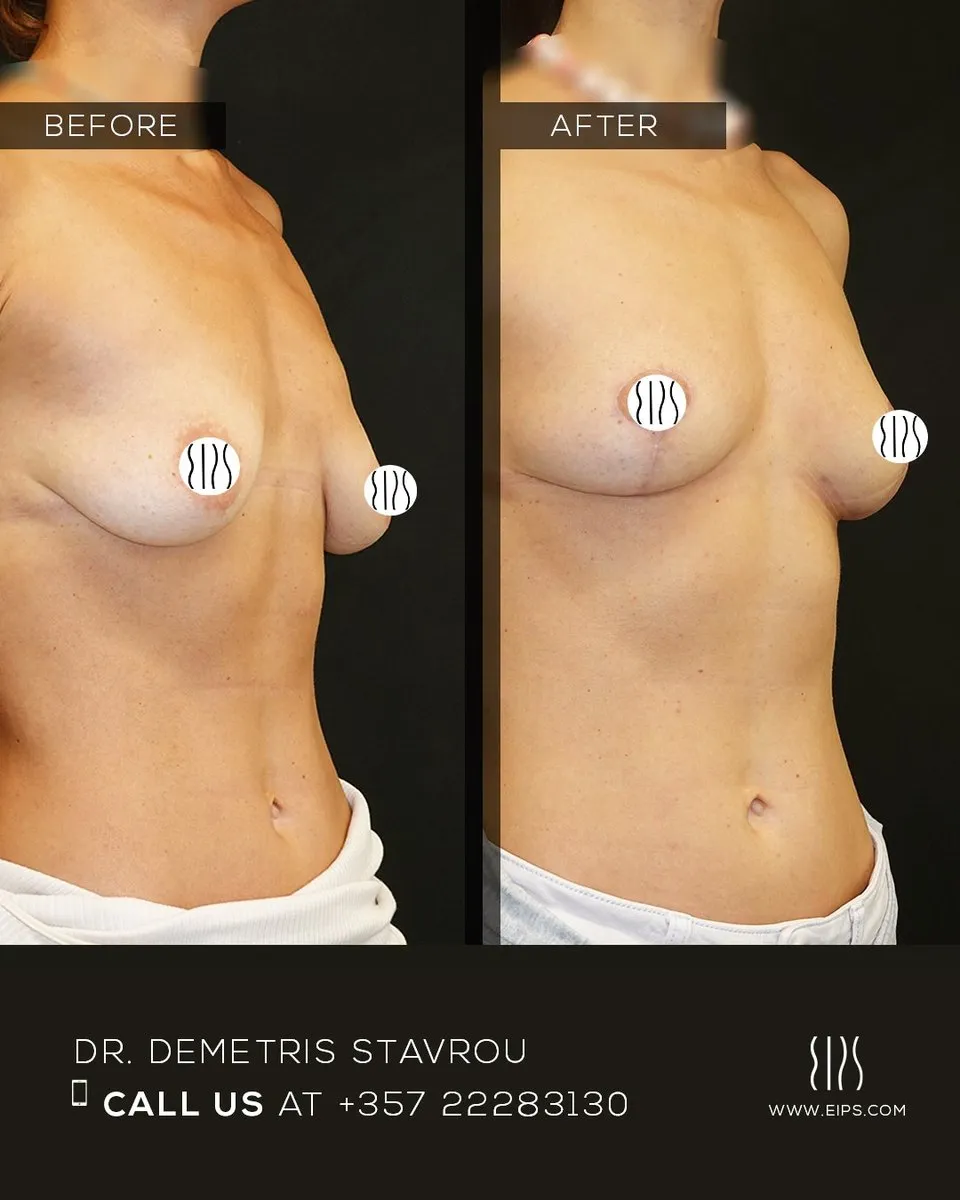
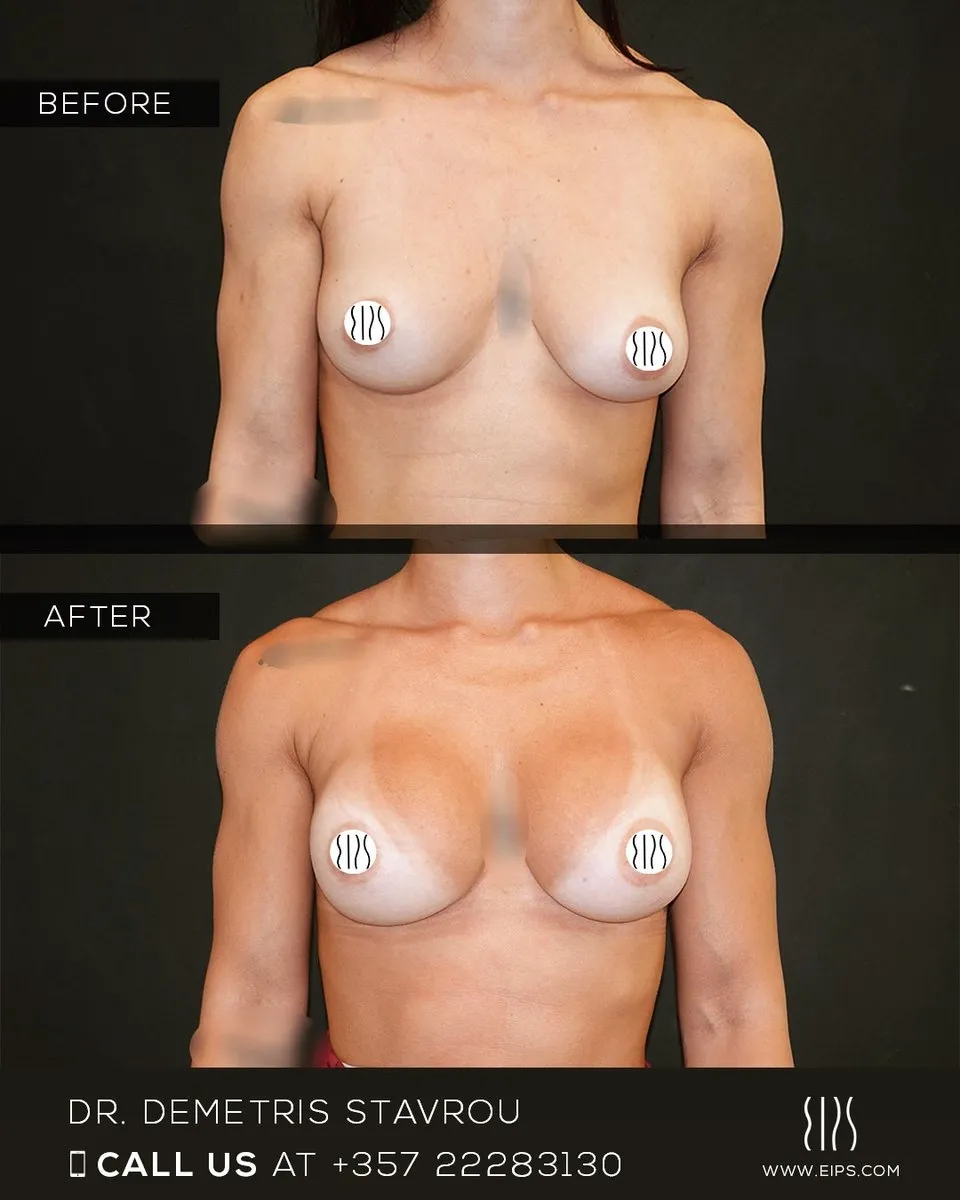
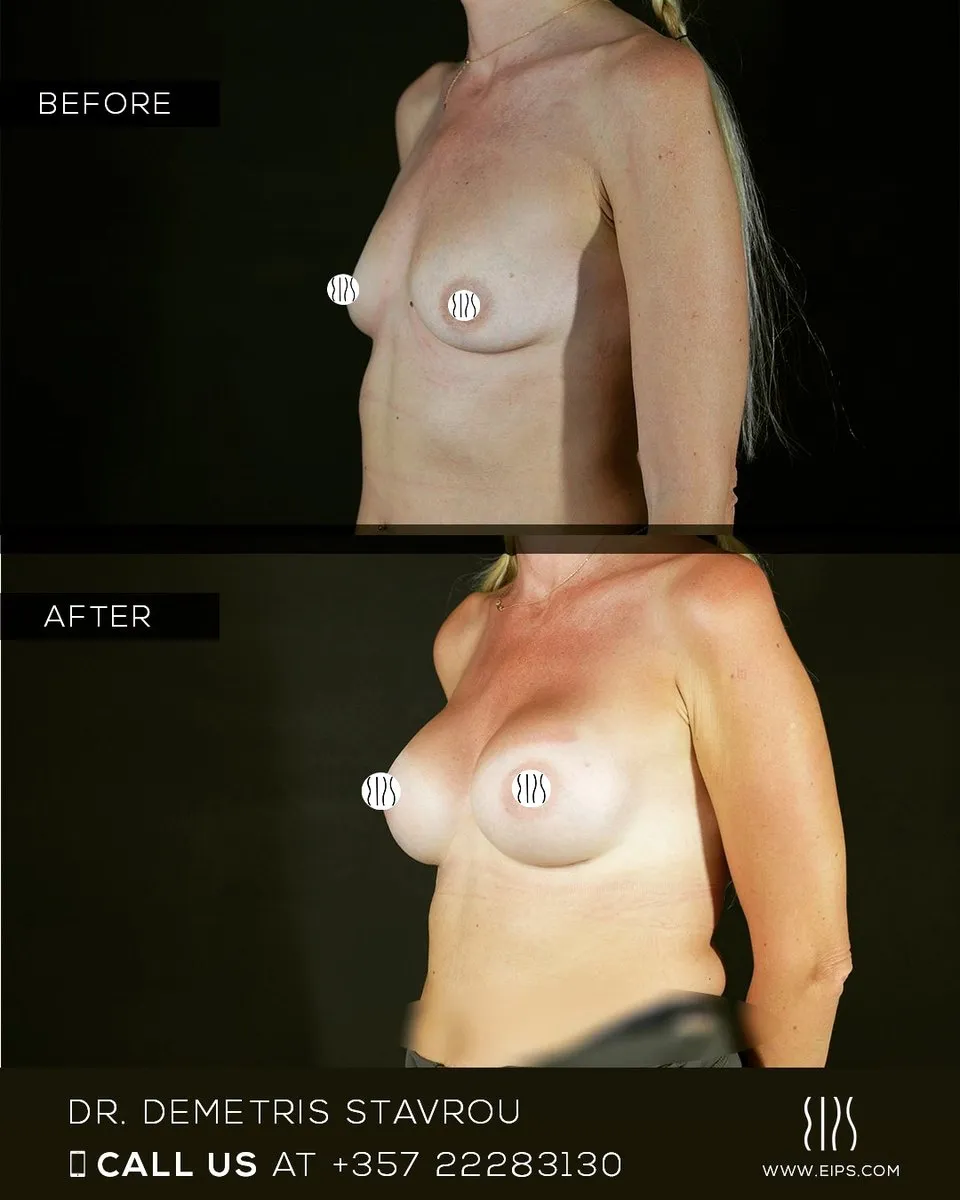
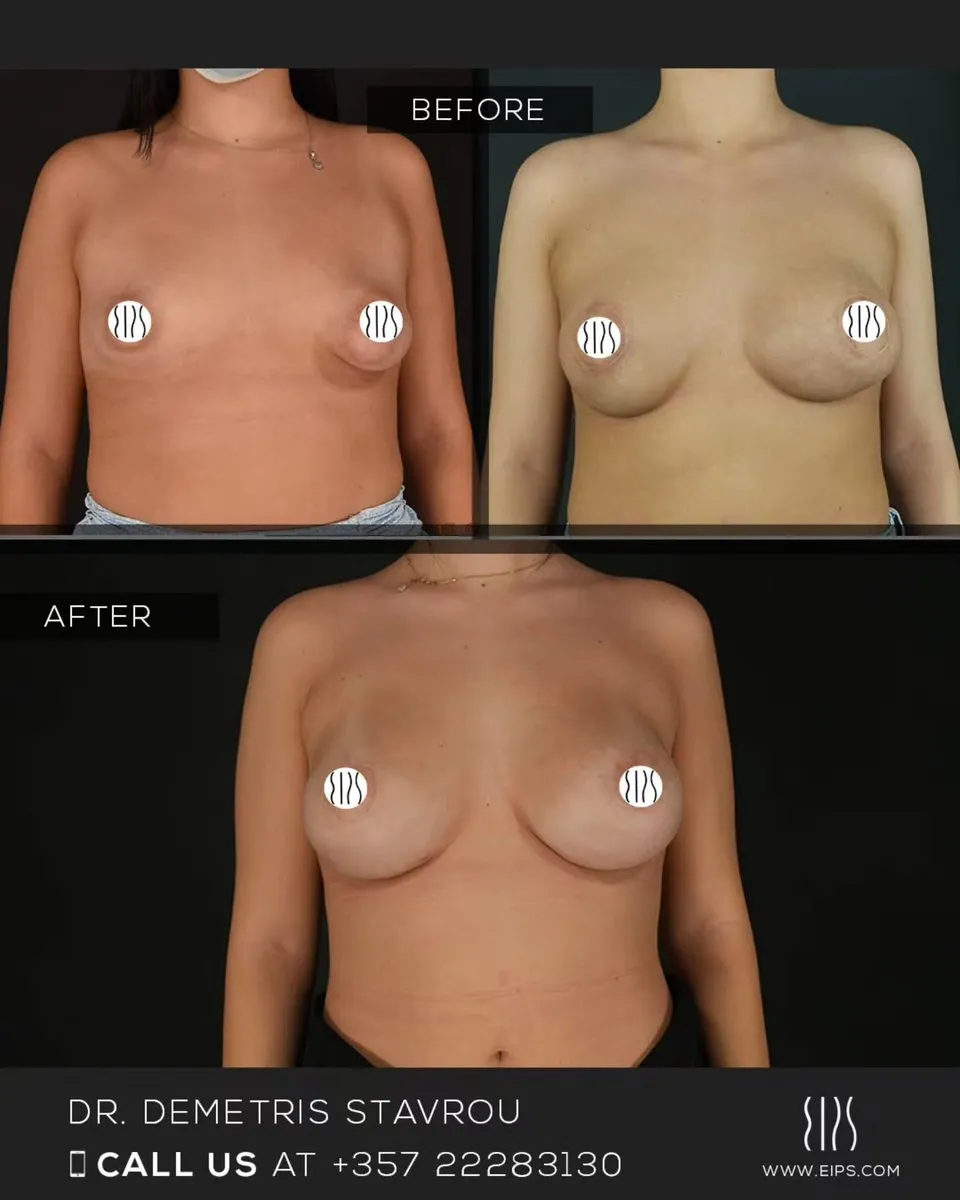
24 cases published with the patient's written consent. These are individual results, not an average and not a guarantee.
Questions patients ask
What implants are used for breast augmentation?
Implants add or restore breast volume and can improve proportion and symmetry. The type and projection depend on the patient's goals, skin, breast tissue and anatomy. Smooth silicone implants are intended to feel and move like breast tissue and to maintain softness over time.
How long is breast augmentation surgery?
The average duration is 30 to 40 minutes, unless the augmentation is combined with another procedure.
How long do you wear a surgical bra after breast augmentation?
A surgical bra is worn for six to eight weeks after surgery. The surgeon's instructions on garments should be followed closely throughout that period.
When does the feeling of tightness go away?
Tightness may last from three weeks up to three months. Major post-operative swelling resolves quickly, but the breasts may remain swollen and tender to touch for a month or longer. There is usually a noticeable change after week two, and the implants begin to settle in week three.
Is breast augmentation recovery painful?
Patients experience manageable pain during recovery. Pain medication is prescribed, particularly for the first two to three days after surgery.
Can a breast lift and augmentation be done at the same time?
Yes — the combination is called augmentation mastopexy. Implants restore lost volume but do not correct sagging. Where there is moderate or severe ptosis, adding an implant alone is unlikely to give a good result. A lift corrects the sagging and raises the nipple, so that any increase in size sits naturally with the patient's proportions.
What will my scars be like?
Scar formation is a normal part of healing and depends largely on how an individual heals. Techniques to relieve tension on the wound are used to reduce the risk of poor scarring. Most scars fade over time to a fine line, and inframammary incisions sit beneath the breast where they are covered by a bra or bikini.
Will I need further surgery later?
Not necessarily, and not on a fixed schedule. Breast tissue changes with age, and personal preferences change too, so some patients later seek implant removal, replacement or a change of size. Based on clinical data, Dr. Stavrou advises patients to begin thinking about exchange around 10 to 15 years after placement. There is no reason to have further surgery in the absence of a problem or a wish for a different result.
Can I have breast augmentation in Athens?
Yes. Dr Stavrou consults in Athens at Leoforos Kifisias 58 (3rd floor) in Marousi and operates at Iatriko Athinon in Marousi or at Mediterraneo Hospital in Glyfada; which hospital is agreed at the consultation. Consultation, surgery and follow-up all take place in Athens. To book in Athens, call +30 697 188 1572.
Where it is performed
- Surgery in Cyprus
- The Surgery Center 3i, Strovolos
- Surgery in Athens
- Iatriko Athinon, Marousi Mediterraneo Hospital, Glyfada
Where yours takes place is agreed at the consultation.
How we quote
A quotation follows consultation, because what it costs depends on what the operation actually involves for you — the technique, the time in theatre, and whether anything is being addressed at the same time. We do not publish price lists and we do not quote before examining you.
Arranging a consultation
Book a slot in the clinic diary directly, or send the details of what you are considering and we will reply with the times we have.