Procedure
Breast Reduction in Cyprus
Reduction mammaplasty removes excess breast fat, glandular tissue and skin, repositions the nipple and lifts the remaining tissue. It is performed as much for the physical symptoms of very large breasts as for their appearance.
Procedure facts
- Duration
- Around 3 hours
- Anaesthesia
- General
- Hospital stay
- 1 night
- Pre-admission tests
- Blood tests, MRSA screening, and an ECG where indicated
- Downtime
- 1 month
- Driving
- A few days
- Exercise
- 2–3 weeks
- Final result
- 1 month
Overview
Very large, heavy breasts are a medical concern as well as a cosmetic one. They can cause neck and back pain, distort posture and produce daily physical discomfort. Exercise becomes difficult, rashes develop beneath the breasts, and the weight carried on bra straps grooves the skin of the back and shoulders. There are also practical limits on clothing and swimwear.
Breast reduction, or reduction mammaplasty, removes excess fat, skin and glandular tissue, then repositions the nipple and lifts the remaining breast tissue. It addresses disproportion, relieves back and shoulder pain, and eases the discomfort of oversized breasts.
Why patients consider reduction
- Heavy, oversized and pendulous breasts
- Discomfort and distress
- Difficulty exercising
- Backache
- Breast pain
- Irritation beneath the breasts
- Difficulty finding clothes that fit
- Shoulder and neck pain
- Grooves in the skin from bra straps carrying the extra weight
What the operation involves
On the day of surgery, nursing staff record vital signs including blood pressure and heart rate, and the anaesthetist carries out a pre-operative airway assessment. The surgeon then marks the breasts in detail to determine the size and position of the new breast. The patient is prepared for surgery in a sterile theatre.
Anaesthesia General anaesthesia, administered by a consultant anaesthetist.
Incisions Skin incisions are placed around the areola, at the junction with the breast skin. In most cases a vertical incision from the areola to the inframammary fold is also needed.
Tissue removal and nipple repositioning The pre-operative markings guide the removal of excess breast fat, glandular tissue and skin. The nipple may remain attached to its original nerve and blood supply. Where the breasts are very large and long, the nipple and the tissue beneath it are moved to a higher position.
Closure The incisions are closed carefully to minimise scarring. Sutures may extend vertically down to the crease beneath the breast.
The operation takes around three hours. Depending on the case, an overnight stay may be recommended.
Recovery
The patient wakes with a supportive bra in place. Drainage tubes may be placed in each breast to remove any build-up of fluid or blood; these are removed before the patient leaves the clinic. Pain relief is provided.
While in the clinic, move the joints of the feet, hips and knees to maintain circulation in the legs. Swelling and bruising in the breast are expected. Bruising may last two to three weeks, and subtle swelling can persist for up to three months. Regular massage, as instructed, helps recovery.
Keep the breast area and incisions dry for the first days after surgery. Do not wear an underwired bra until permitted.
Patients feel tired for the first weeks. Light activity can begin on the first day after surgery, but help with heavier household tasks is usually needed.
Recovery varies between patients, and following the post-operative instructions precisely shortens it. Results are long-term, though changes in body weight, pregnancy and ageing may alter the appearance.
After surgery — do
- Rest and take pain medication as instructed
- Wear only the type of bra the surgeon has recommended
- Sleep on your back
- Attend follow-up appointments
- Arrange help at home for the first few days
- Massage the breasts as instructed
- Protect the breasts from pressure and compression
After surgery — do not
- Lift, push or undertake intense activity for several weeks
- Ignore the post-operative instructions
- Smoke
- Expose scars to the sun
- Sleep on your side or front
- Wear ordinary bras
- Take blood thinners
How much smaller will my breasts be?
Desired size is discussed at consultation. Some patients want their breasts made smaller and more proportionate to their frame; others, who have had serious physical limitations from their breast size, want them as small as possible.
Skin quality, chest width and the patient’s own goals are assessed to plan the operation. Volume is moved from the lower to the upper part of the breast, which produces a lifted shape.
Who it suits
Healthy patients over 18 with very large breasts. The operation is not performed before breast development is complete.
Smokers must stop well before surgery — smoking reduces blood flow and slows healing. Patients planning a pregnancy in the near future should postpone the procedure until after they have given birth. Depending on age, mammography may be required beforehand.
Assessment covers the breasts, skin condition, muscle tone and body proportions, together with general medical history and allergies. Previous breast surgery, family history of breast disease, pregnancy, childbirth and lactation should all be disclosed.
Reduction can be combined with liposuction in some cases.
Where the surgery takes place
Dr. Stavrou performs breast reduction in accredited medical centres in Cyprus, Greece and Malta. After surgery the patient is transferred to the recovery suite and monitored by the clinical team.
Risks and considerations
Breast reduction carries the general risks of surgery together with risks specific to the operation. The scars are the main trade-off: they run around the areola and below the breast, fade over one to two years, and can occasionally heal wide or thickened. Changes in nipple and skin sensation are common early on and are usually temporary, though partial loss can be permanent. The ability to breastfeed may be reduced. Less common risks include a difference in size or shape between the two sides, delayed healing at the point where the scars meet and, rarely, a compromise to the blood supply of the nipple. Following the post-operative instructions closely is part of a safe recovery, and the trade-offs are set out in full at the consultation.
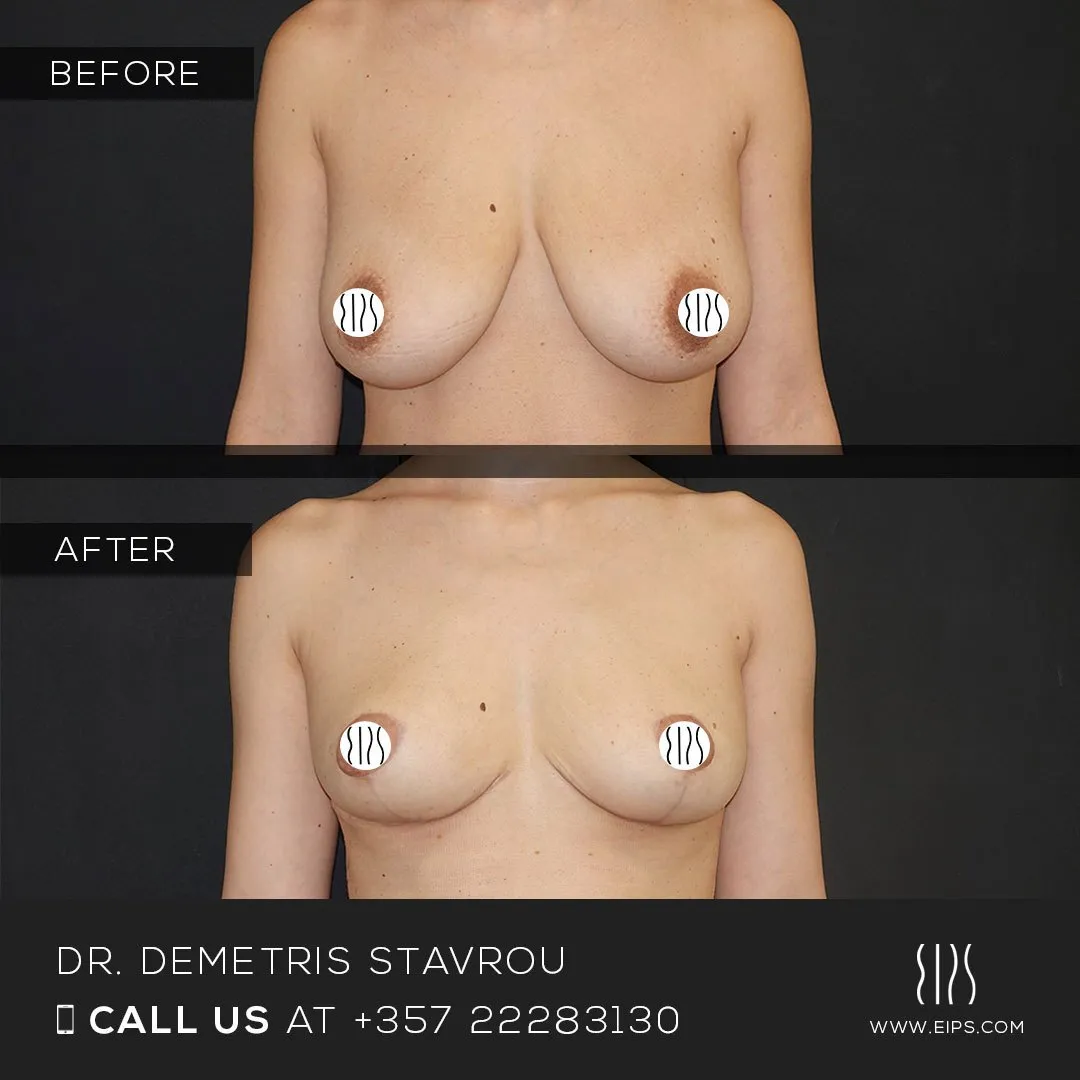
Before and after
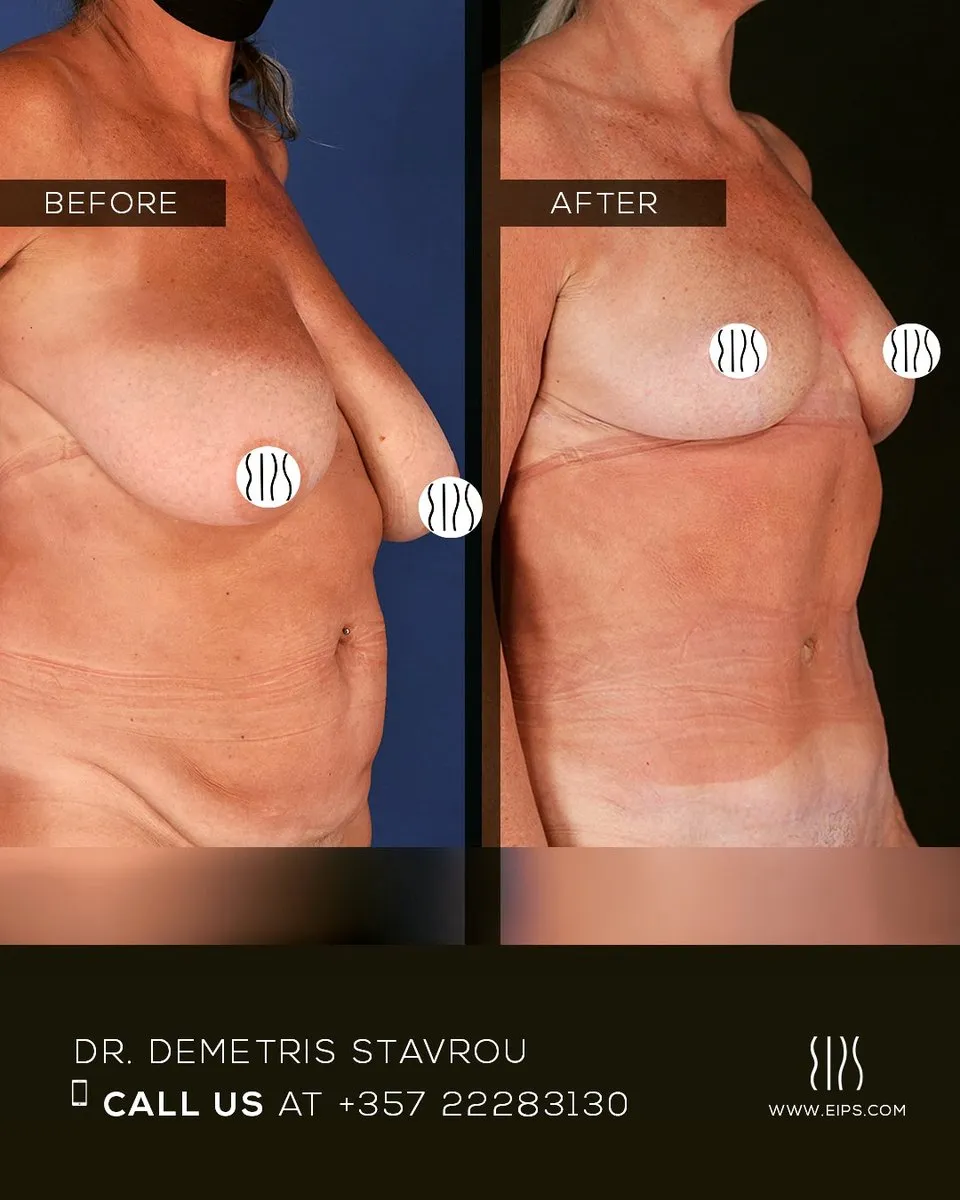
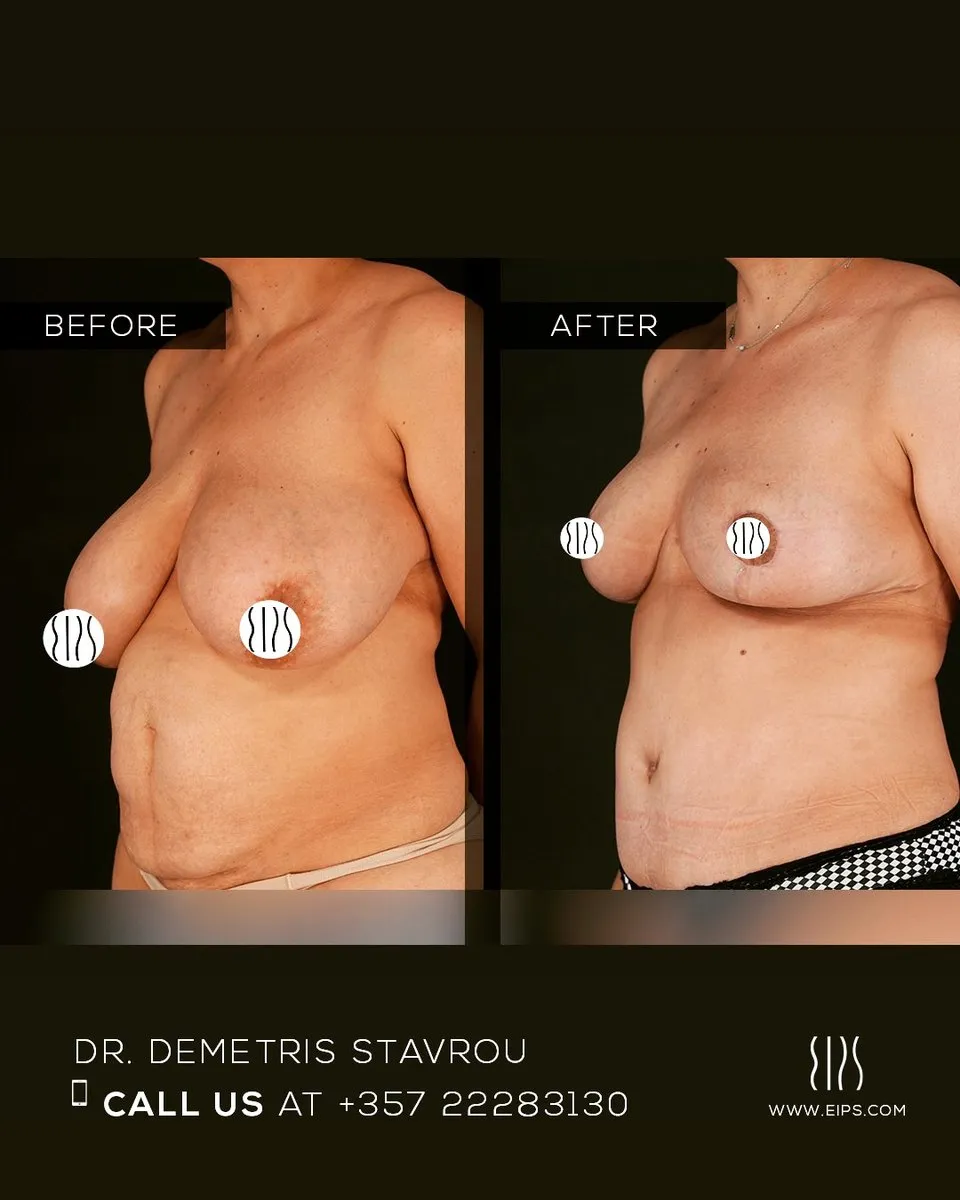
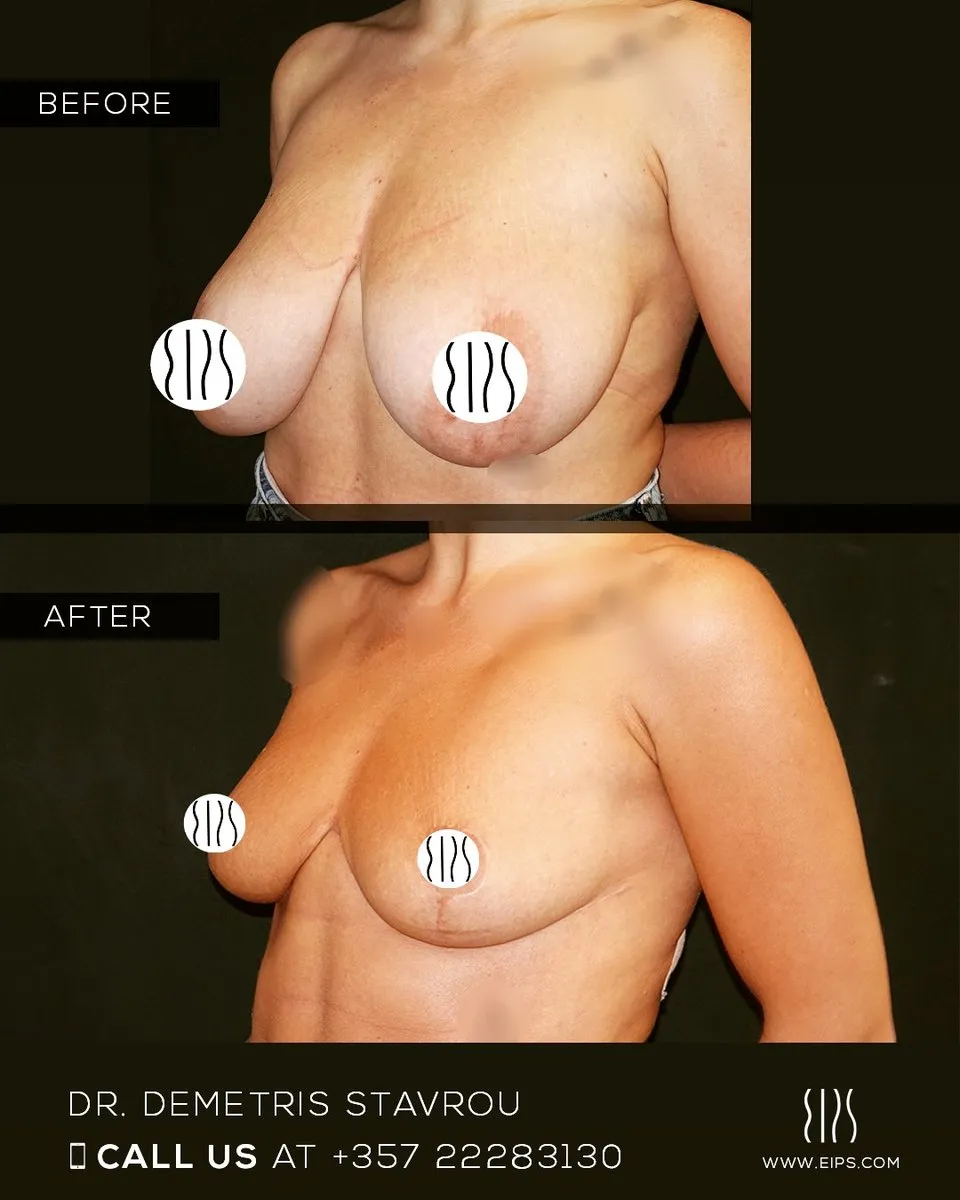
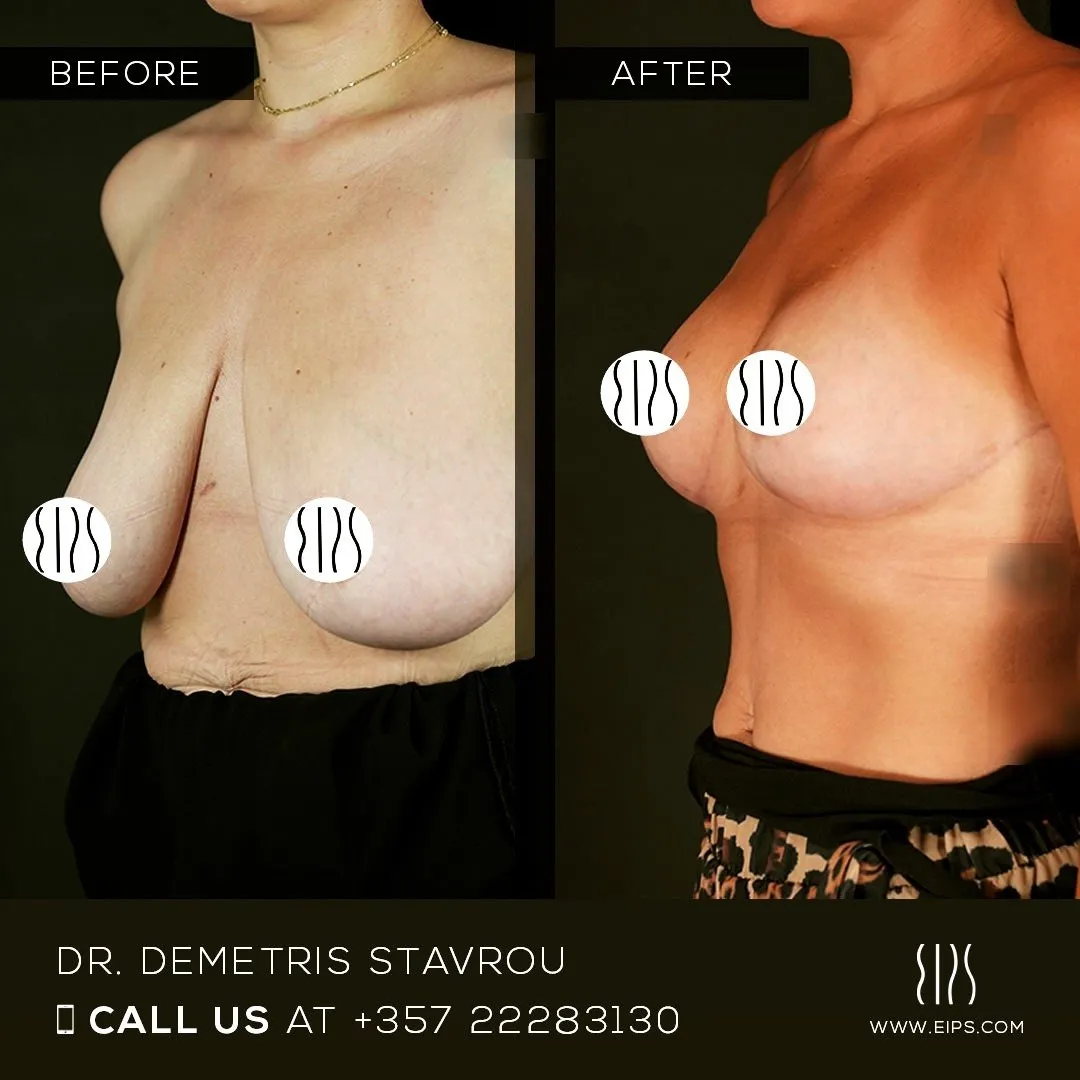
5 cases published with the patient's written consent. These are individual results, not an average and not a guarantee.
Questions patients ask
Is breast reduction surgery painful?
Patients may have moderate pain after surgery, which is managed with prescribed painkillers. It usually takes around five days for that pain to improve and then resolve.
How long after breast reduction can I drive?
Not within the first two to three days. After that, drive when you are comfortable doing so — it usually takes a few days or more before wearing a seatbelt and driving feel comfortable.
How do I qualify for breast reduction?
Patients with very large breasts causing back, neck and shoulder pain, and without significant medical history, may be candidates. The breasts should be fully developed, so patients should generally be at least 18, though exceptions are made for younger patients in some cases. Suitability is decided at consultation.
What are the scars after breast reduction?
The scars are generally placed where they are not visible on the reconstructed breast. They may take months to years to fade, and daily massage helps that process.
How large do breasts need to be for a reduction?
The decision is not based on size alone but on physical discomfort, back pain and other medical concerns. Typically candidates have breasts that are disproportionately large relative to their body frame.
What age is suitable for breast reduction?
There is no specific age requirement, but the breasts should be fully developed first, which is usually by the late teens or early twenties. Timing is decided at consultation.
How many cup sizes can you lose with a breast reduction?
This varies with the starting breast size and the surgical technique used. On average, patients can expect to go down one to three cup sizes.
Do breasts grow back after a reduction?
Breast reduction removes excess breast tissue, but the breast can still change over time with ageing, weight change or hormonal change. Significant regrowth is rare.
Will I go down a shirt size after breast reduction?
It is possible, particularly where the breasts were significantly large in relation to the rest of the body. Reducing breast size to match the frame produces a more proportionate outline, and patients commonly report better posture and less back and neck pain. How much difference this makes varies between individuals.
How much weight does a breast reduction remove?
A substantial amount of breast tissue can be removed. The amount varies considerably between patients, and is greater where the breasts are very large.
Will I keep sensation in the nipples?
With the technique used at EIPS, the nipple and areola are moved to their new position without disturbing the vessels and nerves that carry sensation. Any temporary loss of sensation or over-sensitivity takes a little time to settle.
Where it is performed
- Surgery in Cyprus
- The Surgery Center 3i, Strovolos
- Surgery in Athens
- Iatriko Athinon, Marousi Mediterraneo Hospital, Glyfada
Where yours takes place is agreed at the consultation.
How we quote
A quotation follows consultation, because what it costs depends on what the operation actually involves for you — the technique, the time in theatre, and whether anything is being addressed at the same time. We do not publish price lists and we do not quote before examining you.
Arranging a consultation
Book a slot in the clinic diary directly, or send the details of what you are considering and we will reply with the times we have.