Procedure
Facelift in Cyprus
Rhytidectomy — surgery that addresses the descent of the face and neck by repositioning the deeper tissues, tightening the underlying muscle and removing the skin that is left over. Results typically last up to ten years.
Procedure facts
- Duration
- 4–5 hours
- Anaesthesia
- General
- Hospital stay
- One night
- Pre-admission tests
- Blood tests and a cardiovascular evaluation
- Downtime
- 2 weeks off work; about 1 month to look fully normal
- Driving
- 1 week
- Exercise
- 2–3 weeks
- Final result
- 2–3 months
Overview
With age the face loses elasticity and volume. Sun exposure, stress and lifestyle accelerate the process, and the result is wrinkles, folds and sagging skin.
What a facelift is
A facelift, or rhytidectomy, addresses the signs of ageing on the face and neck by tightening loose skin, with the aim of a more rested appearance that still looks like the same face. It addresses loss of skin elasticity, loss of soft tissue tone and the deep wrinkles that emerge as a consequence. It does not change the underlying facial skeleton, which also alters with age.
Results typically last up to ten years. Recovery usually takes around two weeks before returning to normal activities.
Mini-facelift
The mini-facelift suits younger patients with mild jowling and sagging. It uses shorter incisions along the hairline and the creases of the ear. It is performed under general or local anaesthesia and takes approximately two to three hours.
What it improves
- Fewer wrinkles
- Improvement of sagging skin
- Better skin quality and tone
- A natural-looking result
- Rounder, smoother cheeks
- Improvement of the deep folds between the mouth and cheeks
- A defined neck and jawline
What the operation involves
Anaesthesia General anaesthesia, performed by a board-certified anaesthesiologist.
Incisions The incisions run just behind the hairline, starting near the temples and following the hairline down to the ear, around the earlobe and into the lower scalp, so that the scars are hidden within the hair and within existing facial creases. The facial skin is lifted, the deeper tissues are repositioned, the surrounding muscles are tightened and the excess skin is removed.
Closure The incisions are closed with sutures, with close attention to detail.
Recovery
Some swelling and bruising is expected after any facial surgery and gradually settles after about ten to fourteen days.
After two days patients can shower and gently wash their hair. Sleeping with extra pillows elevates the head and reduces swelling. Most patients return to normal activities after about two weeks; strenuous activity resumes after three weeks. Sun protection matters throughout, both to prevent hyperpigmentation and to support scar healing.
Facelift surgery for men
Men request facial rejuvenation for the same reasons as women and often for professional ones as well. Dr. Stavrou offers facelift surgery for men planned around the individual hair pattern.
Where the surgery takes place
The procedure is performed in accredited medical centres in Cyprus, Greece and Malta, in a sterile operating theatre with staff trained and specialised in this work. After surgery the patient is transferred to the recovery suite and monitored.
Risks and considerations
Complications such as temporary numbness, swelling or minor hair loss around the incision areas can occur. Serious complications are rare when the surgery is performed by an experienced plastic surgeon. The specific risks that apply to an individual patient are discussed at consultation.
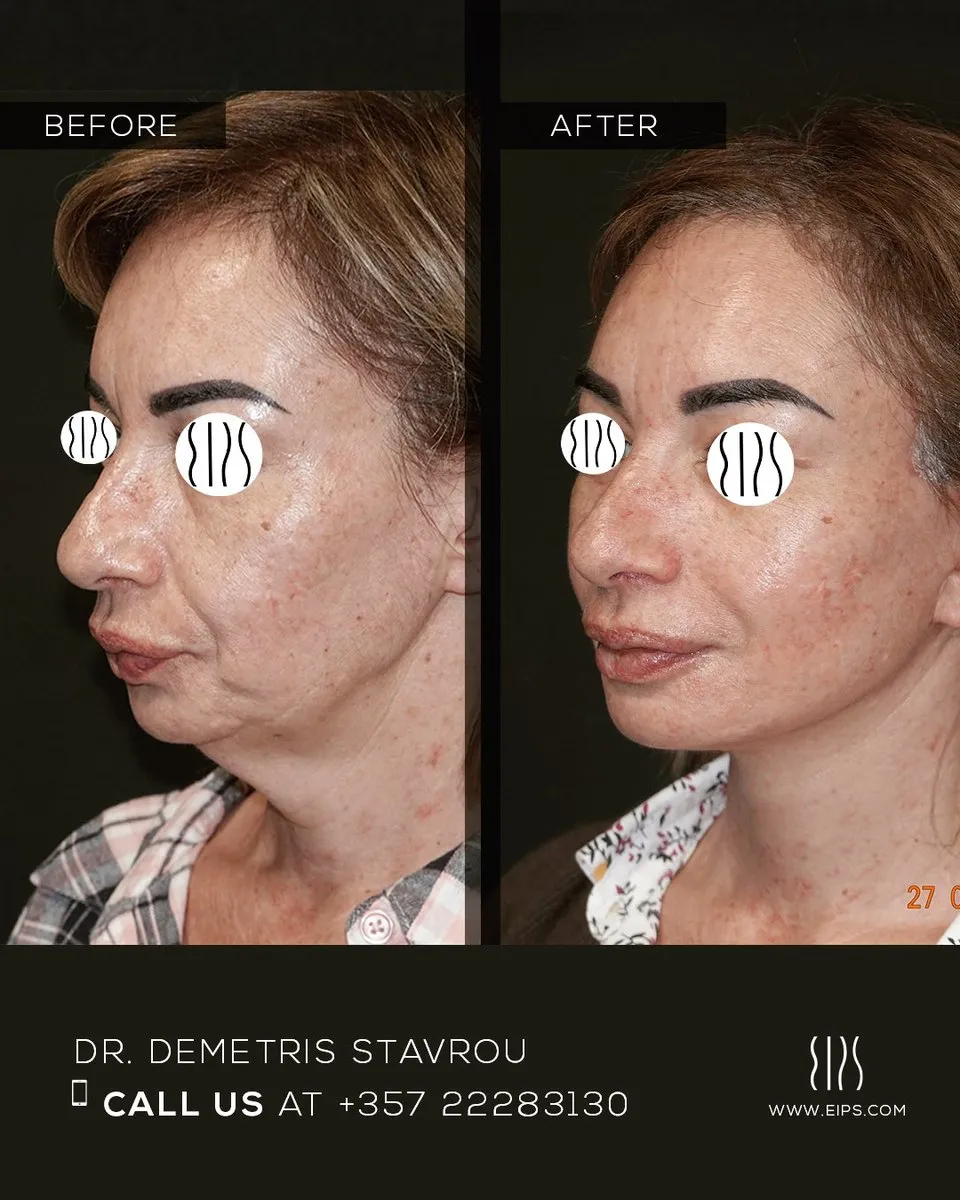
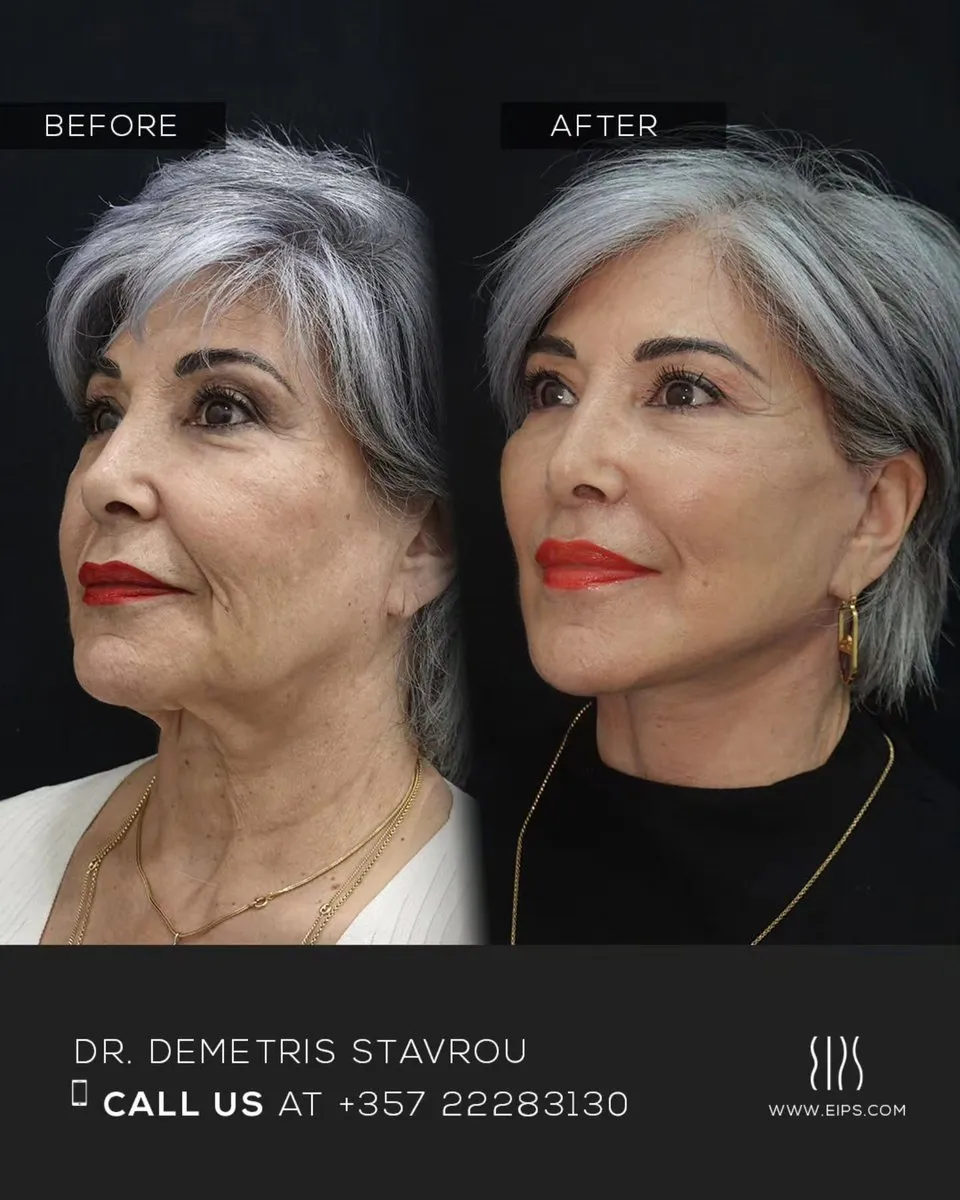
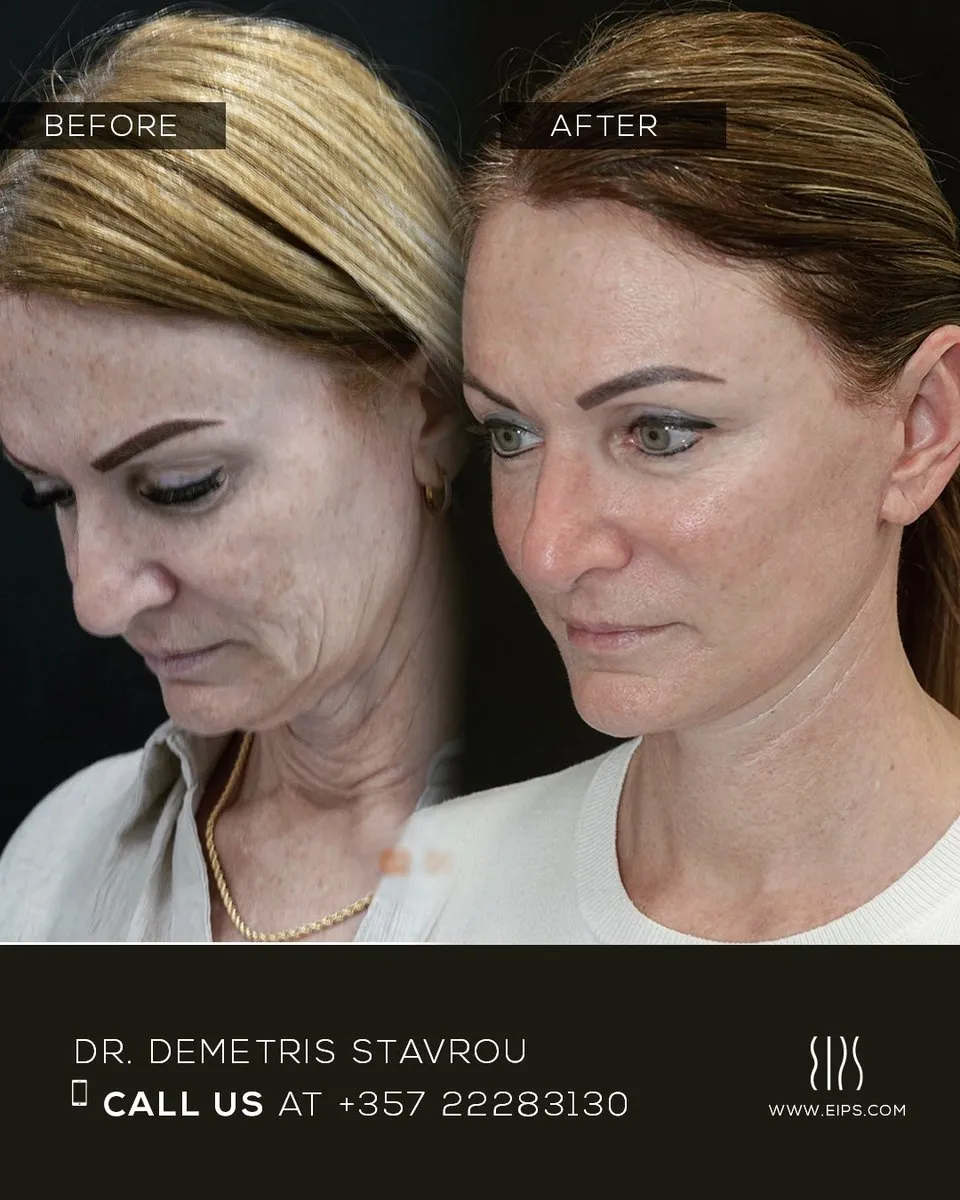
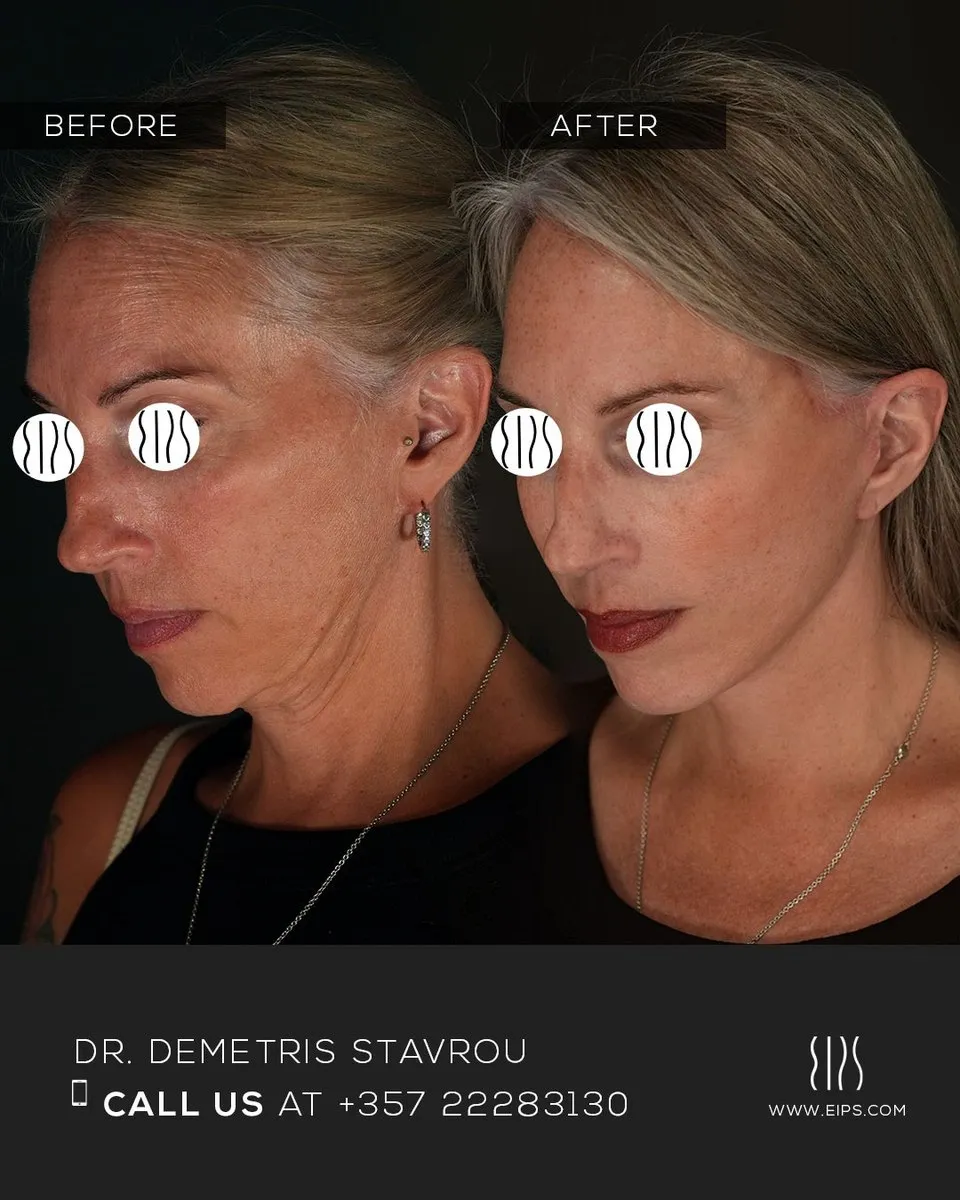
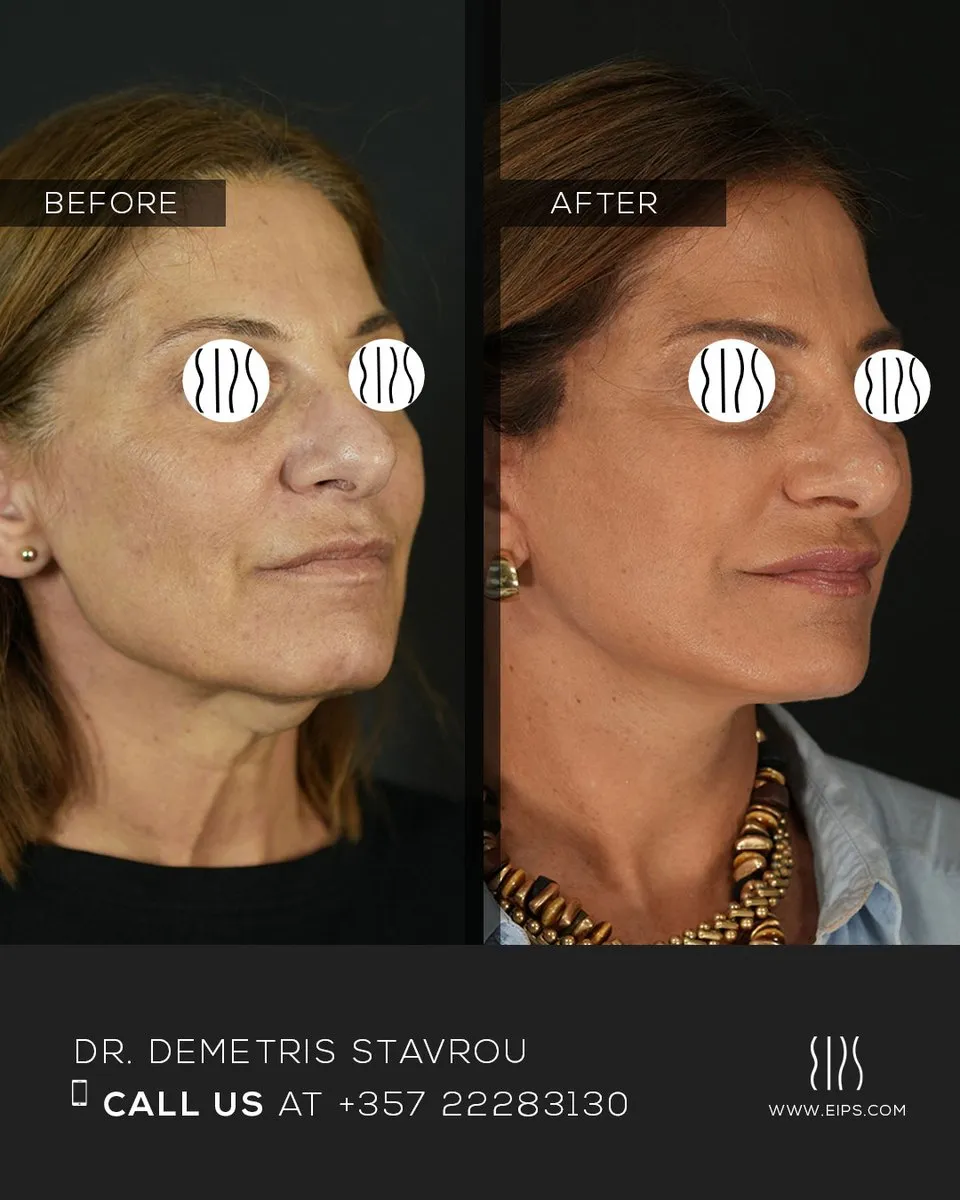
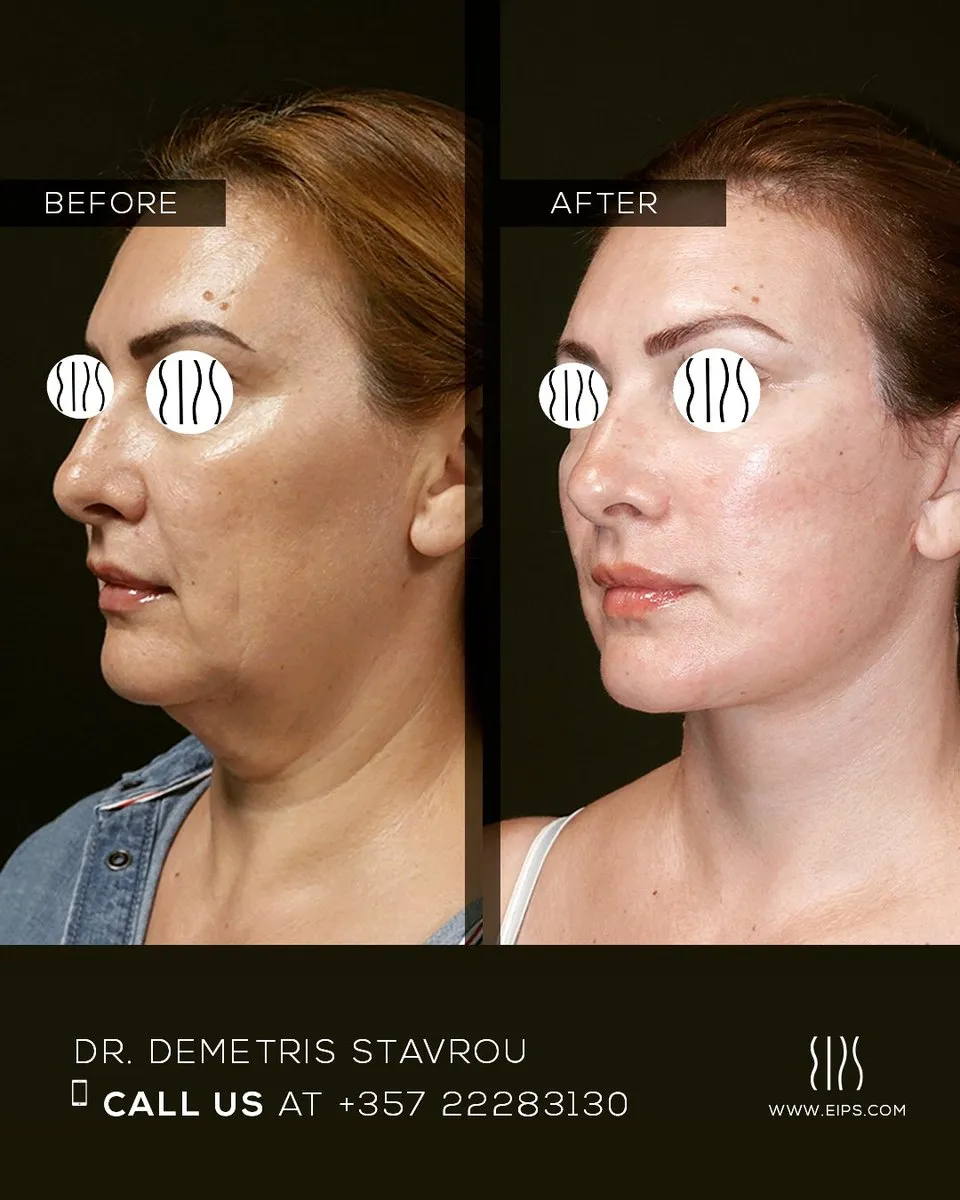
Before and after
10 cases published with the patient's written consent. These are individual results, not an average and not a guarantee.
Questions patients ask
What should I expect after facelift surgery?
A rested, natural result that reflects your own energy level rather than an altered face. The result endures for many years. Natural ageing continues, and proper skin care and non-surgical treatments extend the benefit of the surgery.
When can I sleep on my side after a facelift?
Not for the first two weeks. Most patients can begin sleeping on their side between two and four weeks after surgery.
Can other procedures be done at the same time as a facelift?
Facelifts are often combined with blepharoplasty, to remove excess eyelid skin, and with a brow lift. In selected cases fat transfer is used to smooth deep facial lines and add volume to features such as the chin and cheeks.
Is a facelift right for me?
Facial bone structure, skin composition, skin thickness, texture and elasticity, and the extent of facial wrinkles and folds affect each person differently. Dr. Stavrou formulates an individual plan around those features and the patient's own aims.
How long should I stay before flying home?
The first night is spent in hospital, and the sutures come out at the review around day seven. A short flight is reasonable from seven days and a long-haul flight from ten, where recovery has been uncomplicated. Keep your head elevated on the flight and avoid pressing the side of your face against the seat.
Patient guides
- The fear of looking unnatural after a facelift
- Stress, healing and facial ageing after a facelift
- Minimally invasive facelifts, and their limits
- Combining a Facelift With Other Procedures
- Facelift Surgery and Beard Growth
- Facelifts by Age — What Suits When
More patient guides
- Who Is a Candidate for a Male Facelift
- Male and Female Facelifts Compared
- Thread Lift or Facelift — How to Decide
- After a Facelift — Managing Recovery
- Preparing for Facelift Surgery
- Facelift Risks and Complications
- Who Is a Candidate for a Facelift?
- Facelift Recovery, Week by Week
- Facelift or Botulinum Toxin?
- Combining a Facelift and a Brow Lift
- Acne Scarring and Facelift Surgery
- Does a Facelift Remove Wrinkles?
- Types of Facelift and Where the Incisions Go
- Sun and Swimming After a Facelift
- Facelift Myths and Facts
- The Different Types of Facelift
- How Modern Facelift Technique Differs
Related procedures
Where it is performed
- Surgery in Cyprus
- The Surgery Center 3i, Strovolos
- Surgery in Athens
- Iatriko Athinon, Marousi Mediterraneo Hospital, Glyfada
Where yours takes place is agreed at the consultation.
How we quote
A quotation follows consultation, because what it costs depends on what the operation actually involves for you — the technique, the time in theatre, and whether anything is being addressed at the same time. We do not publish price lists and we do not quote before examining you.
Choosing your surgeon
- The deeper tissues, not only the skin. A facelift repositions the underlying tissue and tightens the muscle as well as removing skin. Ask how your plan treats each.
- Incisions planned around your hairline. Ask where the scars will sit and how your hair pattern affects that, particularly for men.
- The neck assessed with the face. Treating one without the other leaves a visible mismatch.
- An honest answer on combining procedures. Eyelids, brow and fat transfer are sometimes right alongside a facelift and sometimes not.
- A realistic account of the first two weeks. Swelling, bruising, the night in hospital and when you will look like yourself again.
A question to ask at consultation
Which layers will you reposition, and where exactly will my scars sit?
When to call us
- Swelling on one side of the face or neck that is increasing quickly, or a tight, painful area under the skin
- Fever, or increasing redness, warmth or discharge at an incision
- New weakness or asymmetry when you smile or move your mouth
- Pain that is getting worse rather than better
Calf pain or swelling on one side, breathlessness or chest pain need urgent medical attention where you are.
Arranging a consultation
Book a slot in the clinic diary directly, or send the details of what you are considering and we will reply with the times we have.