Procedure
Breast Reconstruction in Cyprus
Reconstruction rebuilds the shape of the breast after mastectomy or lumpectomy, using an implant, the patient's own tissue, or both. It is usually staged, and the timing depends on what other cancer treatment is planned.
Procedure facts
- Duration
- 1–2 hours for implant reconstruction; 4–10 hours for flap reconstruction
- Hospital stay
- 1–2 nights for implant reconstruction performed at the same time as mastectomy; 2–4 nights for flap reconstruction
Overview
Breast reconstruction rebuilds the shape and appearance of the breast after mastectomy, lumpectomy, or where there is a congenital deformity. Mastectomy is performed either to treat a diagnosed breast cancer or, in patients at very high risk, to reduce the chance of developing one.
Reconstruction often involves several procedures carried out in stages. Whether it begins at the time of the mastectomy or later depends on the individual case.
Patients considering reconstruction should speak to Dr. Stavrou before the surgery to remove the breast or the tumour, so that everyone involved in their care can plan the whole treatment together.
What reconstruction aims to achieve
The goal is a breast of natural shape, size and projection, in balance with the rest of the body and symmetrical with the other side.
There are several routes to it, and the choice depends on the individual case.
Implant reconstruction uses a silicone implant, often with a tissue expander first, to form a new breast mound.
Flap reconstruction, also called autologous reconstruction, uses the patient’s own skin, fat and muscle taken from elsewhere on the body. Implant and flap reconstruction are frequently combined.
Fat transfer and tissue substitutes may be used alongside either approach to refine the result, particularly where the patient’s own tissue is limited.
Surgery to the other breast — augmentation, mastopexy or reduction — may be suggested where only one side has been reconstructed, in order to achieve symmetry.
The nipple-areola complex is usually reconstructed later, around three months after the breast reconstruction itself. That stage requires general anaesthesia, and medical tattooing is used for the areola.
Choosing between implant and flap reconstruction
The decision is made with the oncologist, the breast surgeon and the plastic surgeon together. The factors that bear on it include:
- The location of the cancer
- The size of the tumour
- The size of the breast
- The extent of the breast surgery — lumpectomy, partial or full mastectomy
- Other health conditions and surgical risk factors
- The type of cancer treatment planned
- Body shape and weight
- The amount of tissue available to use
- Whether one or both breasts need treatment
- The patient’s willingness to undergo more than one operation
- How the surgery will affect other parts of the body
- Recovery time
Implant reconstruction
Surgery lasts one to two hours. It is the less invasive of the two, and suits patients with small to medium-sized breasts with little or no ptosis.
There is loss of sensation in the affected breast. The result mimics a natural breast, particularly with silicone rather than saline, and there are fewer scars. Hospital stay is one to two nights when performed at the same time as the mastectomy, with the possibility of further day-case procedures afterwards. Implants must be replaced after some years. Recovery takes three to four weeks. The risk of surgical complications is low and largely confined to the breast. The risk of reconstruction failure is low, though higher than with a flap, and depends on radiotherapy and on the quality of the skin after mastectomy.
Flap reconstruction
Surgery lasts four to ten hours. It is more invasive and more complex, using tissue from the abdomen, buttocks, thighs or back.
There is loss of sensation both in the breast and at the donor site. It is the better choice where the priority is a result that mimics a natural breast, though it leaves more scars. Hospital stay is two to four nights, with the possibility of further day-case procedures afterwards. Tissue flaps cannot be replaced, and where complications occur some procedures cannot be repeated. Recovery takes four to six weeks. The risk of surgical complications is low, at both the breast and the donor site, as is the risk of partial or complete flap loss.
When reconstruction is done
Each case is different, and timing requires its own decision. Before it is made, the full team — breast surgeon, radiation oncologist, medical oncologist, plastic surgeon and others involved in the patient’s care — should discuss the case together. Reconstruction can be carried out at the same time as the mastectomy or lumpectomy, or after cancer treatment is complete, which may be months or years later.
Immediate reconstruction
Performed at the same time as the mastectomy. The breast surgeon removes part or all of the breast, and the plastic surgeon reconstructs it with an implant, with tissue from elsewhere, or with both. It is done in a single operation and the patient wakes with a reconstructed breast.
Where a prophylactic mastectomy is performed on a healthy patient to reduce a high risk of breast cancer, reconstruction is always immediate. Immediate reconstruction may not be possible where further treatment such as chemotherapy or radiotherapy is needed.
Delayed reconstruction
Cancers larger than five centimetres, and those that have spread to the lymph nodes, are likely to require chemotherapy and radiotherapy after surgery. Those treatments can substantially change a reconstructed breast — loss of volume, changes in skin colour, texture and appearance, scars that worsen over time, pain and tightness.
Most surgeons therefore advise waiting until chemotherapy and radiotherapy are finished. Reconstruction may then take place anywhere from six months to several years after the mastectomy or lumpectomy. In the interval the patient can wear a breast prosthesis — an external form made of silicone gel or a similar soft material, designed to match the shape, size and weight of a natural breast, and which fits inside different bra cup sizes.
Delayed-immediate reconstruction
A more recent approach. An implant or tissue expander is placed under the chest muscle immediately after the breast is removed, preserving the shape and the skin of the breast through the course of radiotherapy. Around four to six months after the additional treatment is complete and the tissues have recovered, the implant or expander is removed at a second operation and replaced with a flap from the abdominal donor site.
Recovery
How long recovery takes depends on the type of reconstruction. Most patients begin to feel better after the first week and return to normal activities within a month.
After implant reconstruction, patients may feel tired and sore for one or two weeks; discomfort after flap reconstruction lasts longer. Bruising and swelling can take up to eight weeks to settle.
Drains — small tubes placed in the wound to remove fluid as it heals — are sometimes used, and a follow-up visit is needed to remove them.
Reconstruction does not restore normal feeling to the breast, though partial sensation may return over the years following surgery. During a mastectomy most of the nerves to the breast are divided and the area becomes numb. Reconstruction can restore the appearance and, to a degree, the feel of the breast to the touch of others, but the patient will not have much sensation in the area. Nerves do have the potential to regrow over a period of years, and some patients develop marked sensitivity in the axilla adjacent to the reconstructed breast.
Risks and considerations
Breast reconstruction is a larger undertaking than most cosmetic breast surgery, and the risks depend on the method — an implant, the patient's own tissue, or a combination. All carry the general risks of surgery: bleeding, infection, delayed healing and a reaction to the anaesthetic. Where the patient's own tissue is used there is a risk to the blood supply of the transferred tissue, which is monitored closely after surgery, and a scar at the site the tissue was taken from. Implant-based reconstruction carries the implant-specific risks of capsular contracture, rupture and, rarely, BIA-ALCL. Reconstruction is often staged over more than one operation, and symmetry with the other breast is worked towards rather than guaranteed. The options, and what each involves, are discussed in detail at the consultation.
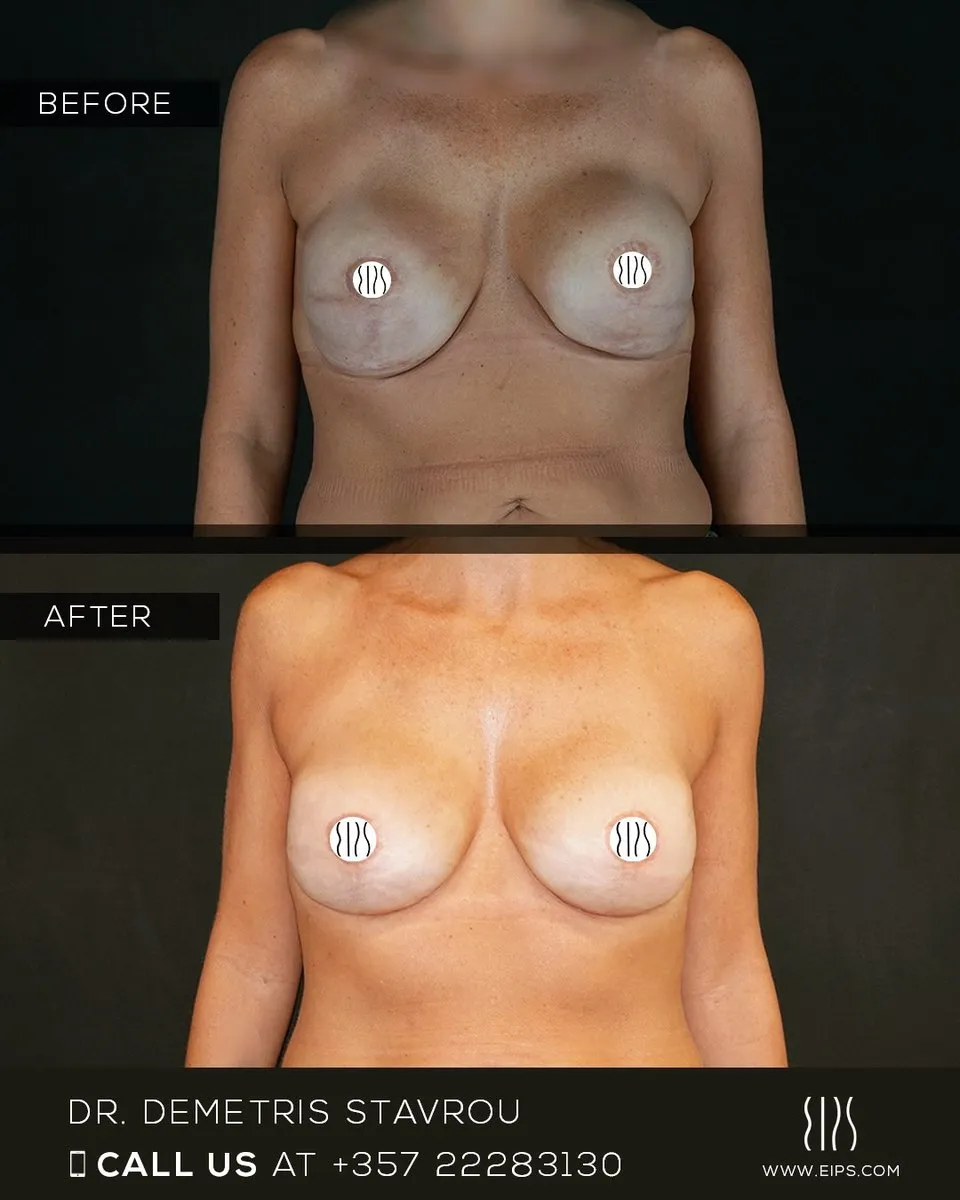
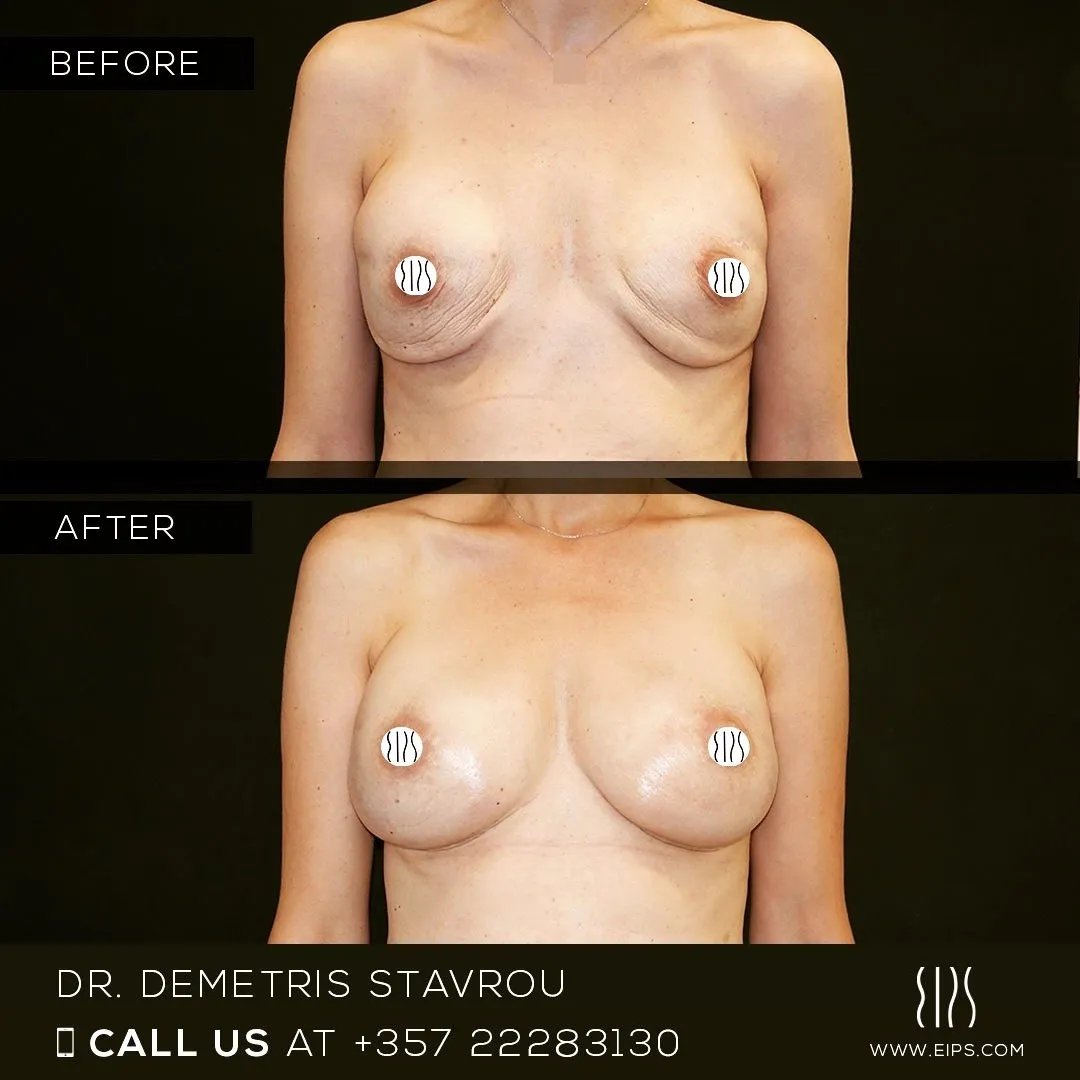
Before and after
2 cases published with the patient's written consent. These are individual results, not an average and not a guarantee.
Questions patients ask
Is breast reconstruction a major operation?
Yes. It is major surgery and may require more than one procedure at different times. Whether the reconstruction uses an implant or a flap, it involves a stay of several days in hospital. Recovery is longer than for other breast operations, particularly after flap surgery.
How long do you have to wait for breast reconstruction?
Patients with stage I or stage II breast cancer are less likely to need chemotherapy or radiotherapy after mastectomy, and are often good candidates for immediate reconstruction at the same time as the mastectomy. The same applies to patients having prophylactic mastectomy. Patients with stage III or stage IV disease almost always need further treatment after surgery, and most doctors advise completing that treatment first. In those cases reconstruction may follow anywhere from six months to several years after the mastectomy or lumpectomy.
Which silicone implant is right for me?
The type and projection of the implant depend on the patient's goals, skin, remaining breast tissue and anatomy. Smooth silicone implants are intended to look and feel like breast tissue and to maintain softness over time. The choice is made at consultation.
Can breast reconstruction make the cancer come back?
Studies have shown that breast reconstruction does not make cancer return. If cancer does recur, a reconstructed breast does not create problems for diagnosis or for treatment. Reconstruction does not affect the risk of a future cancer diagnosis.
Does sensation in the breast change after reconstruction?
During a mastectomy most of the nerves to the breast are divided and the area goes numb. Reconstruction restores the appearance of the breast but not normal sensation. Some sensation can return after a few years, as nerves have the capacity to regrow.
Where it is performed
- Surgery in Cyprus
- The Surgery Center 3i, Strovolos
- Surgery in Athens
- Iatriko Athinon, Marousi Mediterraneo Hospital, Glyfada
Where yours takes place is agreed at the consultation.
How we quote
A quotation follows consultation, because what it costs depends on what the operation actually involves for you — the technique, the time in theatre, and whether anything is being addressed at the same time. We do not publish price lists and we do not quote before examining you.
Arranging a consultation
Book a slot in the clinic diary directly, or send the details of what you are considering and we will reply with the times we have.