Procedure
Body Contouring in Cyprus
Removal of loose skin and residual fat after major weight loss, with tightening of the tissue that remains. It is usually staged across more than one operation, covering the abdomen, breast, arms, thighs and buttock in whatever order the individual case requires.
Procedure facts
- Duration
- 4–5 hours
- Anaesthesia
- General
- Hospital stay
- 1–2 nights
- Pre-admission tests
- Blood tests
- Downtime
- 1–2 weeks
- Driving
- 1 week
- Exercise
- 1 month
- Final result
- 3–4 months
Overview
Body contouring is the operation that follows weight loss rather than the one that produces it. When a large amount of weight comes off — after bariatric surgery, after pregnancy, or after a sustained diet — the skin that was stretched to accommodate it does not retract. What is left is an envelope with no elasticity and nothing underneath to support it.
What body contouring does
Contouring removes that redundant skin and the fat beneath it, and tightens the tissue that remains. The areas typically treated are the abdomen, breast, thighs, buttock, and the upper and lower limbs.
Because weight loss affects several areas at once, contouring is normally performed in stages. The whole sequence can take several months to complete, depending on how many areas need addressing.
Weight must be stable first
Patients need to have reached their target weight and held it there for several months before contouring begins. Weight gained after the operation stresses the tightened skin and produces widened scars and stretch marks — which undoes the point of the exercise.
The component operations
Contouring is a category, not a single operation. Depending on where the skin excess sits, it may include:
Arm lift (brachioplasty) — tightens loose skin and removes excess fat in the upper arm, where diet and exercise cannot reach the skin itself.
Breast lift (mastopexy) — removes excess skin from the breast, tightens the remaining breast tissue and repositions the nipple.
Tummy tuck (abdominoplasty) — addresses excess fat and loose skin across the waist and abdomen, with tightening of the abdominal muscles.
Thigh lift — tightens sagging skin, reshapes loose tissue and removes excess fat around the thigh.
What the operation involves
Every contouring procedure requires incisions to remove skin. How long they are, and what anaesthesia is used, depends on the extent of the problem and which operation is being performed.
Incisions are placed where the scar can be covered by clothing.
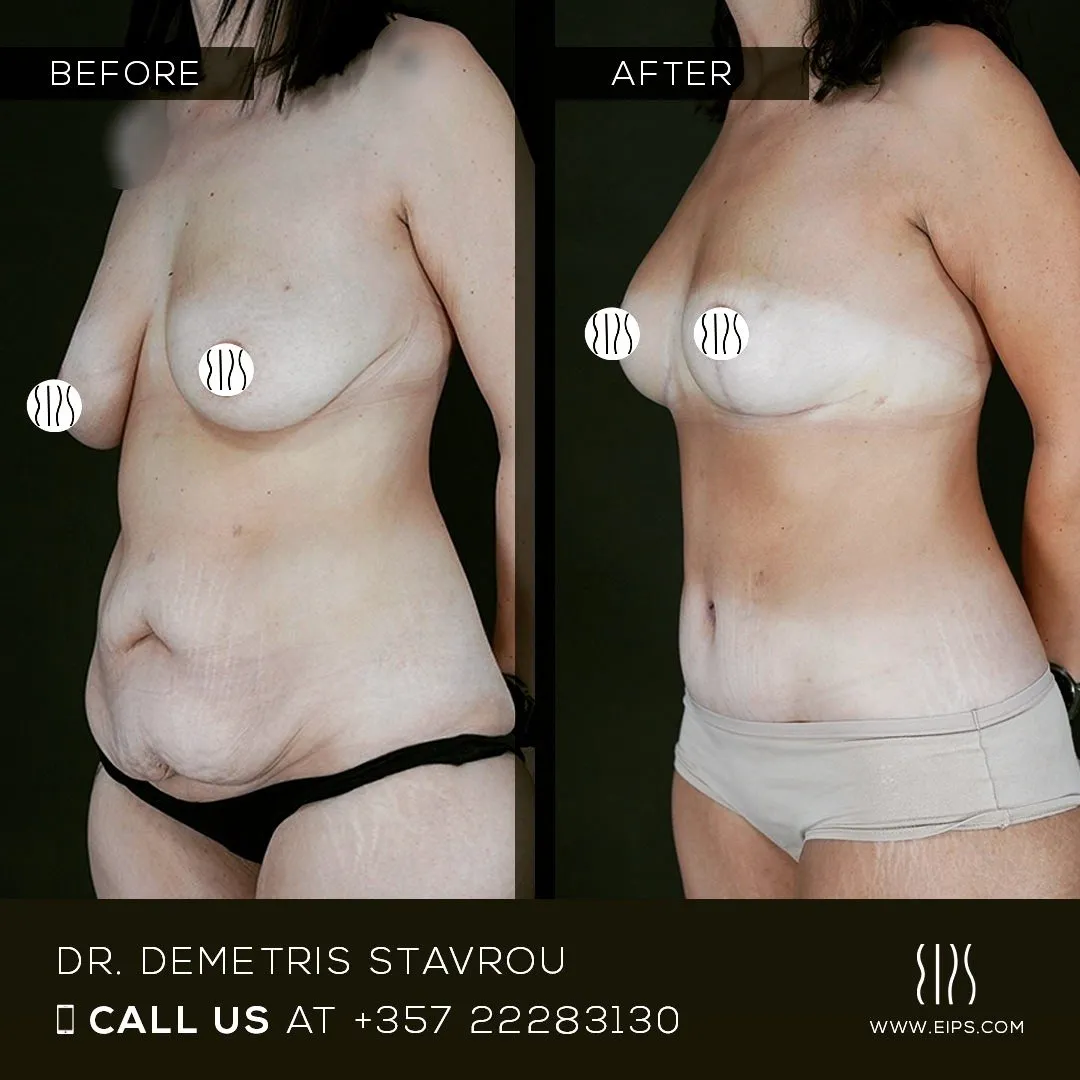
A lower body lift takes in the abdomen, waist, buttock, hips, and inner and outer thighs, removing skin and fat across all of them. It can be done as a single operation or split across two or more stages.
An upper body lift covers skin and fat removal and reshaping of the arms and breast.
The skin is closed to keep scarring to a minimum. Temporary drains may be inserted to clear fluid and blood from the operated sites.
Recovery
Recovery depends on how extensive the procedure was. Dressings are applied to the incisions and small drainage tubes may be placed under the skin to reduce fluid collection.
Bruising, swelling, numbness and general discomfort are expected in the early weeks. Compression garments are worn for several days afterwards.
Normal activity generally resumes at two to three weeks. Straining, lifting and bending are avoided for several weeks longer.
Gentle walking should start as soon as possible after the operation, and fluid intake kept up, to reduce the risk of clots in the legs.
Results are long-term, though later changes in body weight or a pregnancy will alter the shape again.
Risks and considerations
Body contouring after major weight loss removes surplus skin and carries the general risks of surgery, together with a raised risk of blood clots and of delayed wound healing, both greater where large areas are treated. The scars are extensive and permanent — their position depends on the areas addressed — and they fade over one to two years, though wide or thickened healing is possible. A collection of fluid under the skin, called a seroma, is common and may need draining. Numbness within the treated areas is usual and can persist. Because these operations are often staged and planned around the patient's general health and nutrition after weight loss, the sequence and the realistic result are worked out individually at the consultation.
Before and after
1 case published with the patient's written consent. These are individual results, not an average and not a guarantee.
Questions patients ask
What is the difference between body contouring and liposuction?
Liposuction removes fat. Body contouring removes skin. After bariatric surgery or major weight loss the remaining skin is loose and has lost its elasticity, and no amount of fat removal addresses that. The two are often combined: liposuction reduces the volume first, and contouring removes the skin envelope that is left over.
Is body contouring painful?
The operation is performed under general anaesthesia, so nothing is felt during it. Afterwards there is pain, managed with prescribed analgesia. How much depends on the number and length of the incisions and on how many areas were treated in the same sitting.
Is body sculpting safe?
Body contouring procedures are safe when performed by qualified surgeons under appropriate protocols, but they are surgery and they carry risk. Swelling and bruising are expected. A thorough medical assessment beforehand, realistic expectations, and following the post-operative instructions all bear on the outcome.
Are the results permanent?
Surgical body contouring physically removes skin and fat, so the change is long-lasting. It is not weight-proof. Regaining weight after surgery stresses the tightened skin and produces widened scars and stretch marks, so a stable weight and consistent exercise are part of keeping the result.
Where it is performed
- Surgery in Cyprus
- The Surgery Center 3i, Strovolos
- Surgery in Athens
- Iatriko Athinon, Marousi Mediterraneo Hospital, Glyfada
Where yours takes place is agreed at the consultation.
How we quote
A quotation follows consultation, because what it costs depends on what the operation actually involves for you — the technique, the time in theatre, and whether anything is being addressed at the same time. We do not publish price lists and we do not quote before examining you.
Arranging a consultation
Book a slot in the clinic diary directly, or send the details of what you are considering and we will reply with the times we have.