Procedure
Abdominoplasty in Cyprus
Removal of excess skin and fat from the abdominal wall, with repair of the abdominal muscles where they have separated. Performed after pregnancy, caesarean section or weight loss, where the skin no longer retracts and the muscle layer underneath has weakened.
Procedure facts
- Duration
- 2 hours
- Anaesthesia
- General
- Hospital stay
- One night
- Pre-admission tests
- Blood tests and electrocardiogram (ECG)
- Downtime
- 1–2 months
- Driving
- 1 week
- Exercise
- 1 month
- Final result
- 3–4 months
Overview
Abdominoplasty addresses two separate problems at once: skin across the lower abdomen that no longer retracts, and abdominal muscles that have weakened or pulled apart in the midline. Either can follow pregnancy, caesarean section, weight loss or simply time, and neither responds to exercise, because neither is a problem of fat.
What the operation does
The operation removes the excess skin and abdominal fat and tightens the loose abdominal muscles, rejoining them where they have separated.
As we age the body produces less collagen and the skin loses elasticity. Even a moderate weight loss can leave slack, wrinkled skin behind, because the skin was stretched by the fat underneath and cannot recover its former shape once that fat has gone.
The operation is suitable for both women and men and the result is long-term, provided weight stays stable afterwards.
Where another pregnancy is planned, the advice is to wait until the family is complete.
It is not a weight-loss operation and is not appropriate for someone who is overweight.
Who it suits
Abdominoplasty patients typically present with one or more of:
- Excess skin and sagging across the waist and abdomen
- Loss of skin elasticity, scars and stretch marks
- Weakened abdominal muscle
- Uneven fat distribution across the abdomen
Smokers need to stop at least six weeks before surgery — smoking reduces blood flow and slows healing. The operation is not performed on someone who is obese or pregnant.
Where there is excess fat but no skin laxity, liposuction alone may be the better answer.
Mini abdominoplasty
Suitable for moderate bulging of the central abdomen. It uses a short incision above the pubic area and the belly button is not moved. The scar sits low across the lower abdomen, similar to a caesarean scar, and is easily covered.
It is less invasive than a full abdominoplasty and is often chosen by younger patients, and particularly suits women who have developed a skin fold above an existing caesarean scar. The result can be improved by combining it with liposuction to the flanks.
Full abdominoplasty
The standard operation, for excess skin, sagging or laxity following pregnancy or significant weight loss.
Fat is removed from the abdominal wall, the abdominal muscles are tightened, and the skin of the upper abdomen is freed as far as the ribs, drawn down and stitched. The belly button is repositioned.
It may require more than one night in the clinic.
What the surgery involves
On the day, vital signs are recorded, the anaesthetist carries out a pre-operative airway assessment, and the surgeon marks up the abdomen in detail.
Anaesthesia General anaesthesia, administered by a certified anaesthesiologist.
Incisions The shape and length depend on which operation is being performed. For a mini-abdominoplasty the incision runs along the underwear line; where there is an existing caesarean scar, that scar is used and extended. The abdominal skin is lifted, the weakened muscle underneath tightened, excess skin removed, and the skin drawn back down. The belly button is not released, so there is no tightening of the skin above it.
For a full abdominoplasty the incision runs horizontally between the navel and the pubic hairline, with a second incision to free the belly button from the surrounding skin. Excess skin and tissue are removed from the abdominal wall and the weakened muscles tightened with stitches, and the belly button is brought out through a new opening.
Closure The skin is closed to keep scarring to a minimum. Temporary drains may be inserted to clear fluid and blood from the surgical site.
Recovery
Standing straight is difficult at first, the abdomen is swollen and feels tight, and analgesia is prescribed for the pain and discomfort.
Walking should begin in hospital as early as possible to keep the circulation moving. An overnight stay is usually required.
Where the incision is long, antibiotics may be prescribed. In full abdominoplasty, drainage tubes are placed in the lower abdomen to clear blood and fluid; these are removed before you go home.
A light compression belt is worn to reduce swelling.
Risks and considerations
Abdominoplasty is a major operation and carries the general risks of surgery — bleeding, infection, delayed healing and a reaction to the anaesthetic — as well as a raised risk of blood clots in the legs, which is why early gentle movement is encouraged and precautions are taken. The scar runs low across the abdomen; it is permanent, fades over one to two years, and can occasionally heal wide or thickened. A collection of fluid under the skin, called a seroma, is one of the more common complications and may need draining. Numbness of the skin below the navel is usual early on and can be long-lasting. Less common risks include areas of delayed healing, particularly in smokers, and asymmetry. The trade-off of the scar against the result is discussed frankly at the consultation.
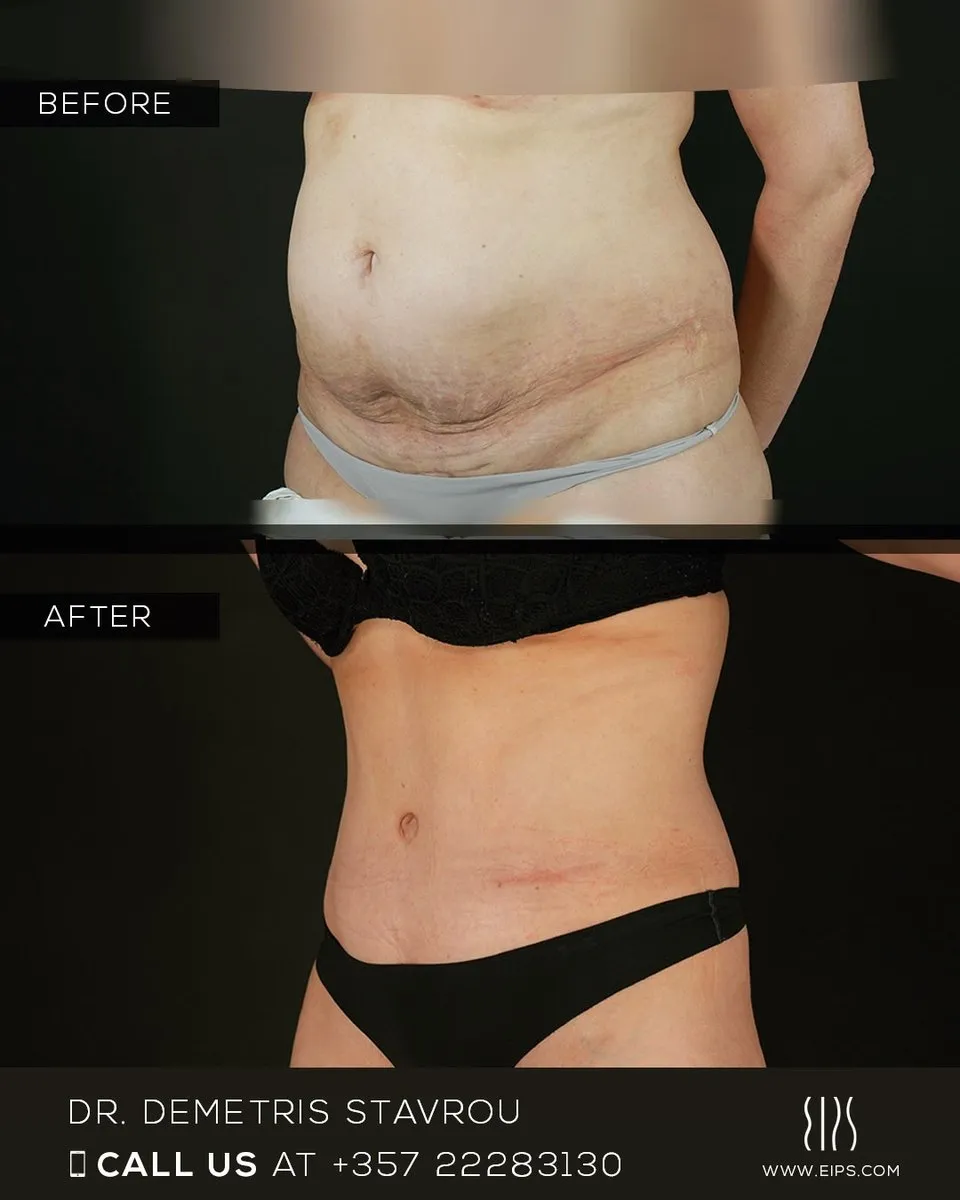
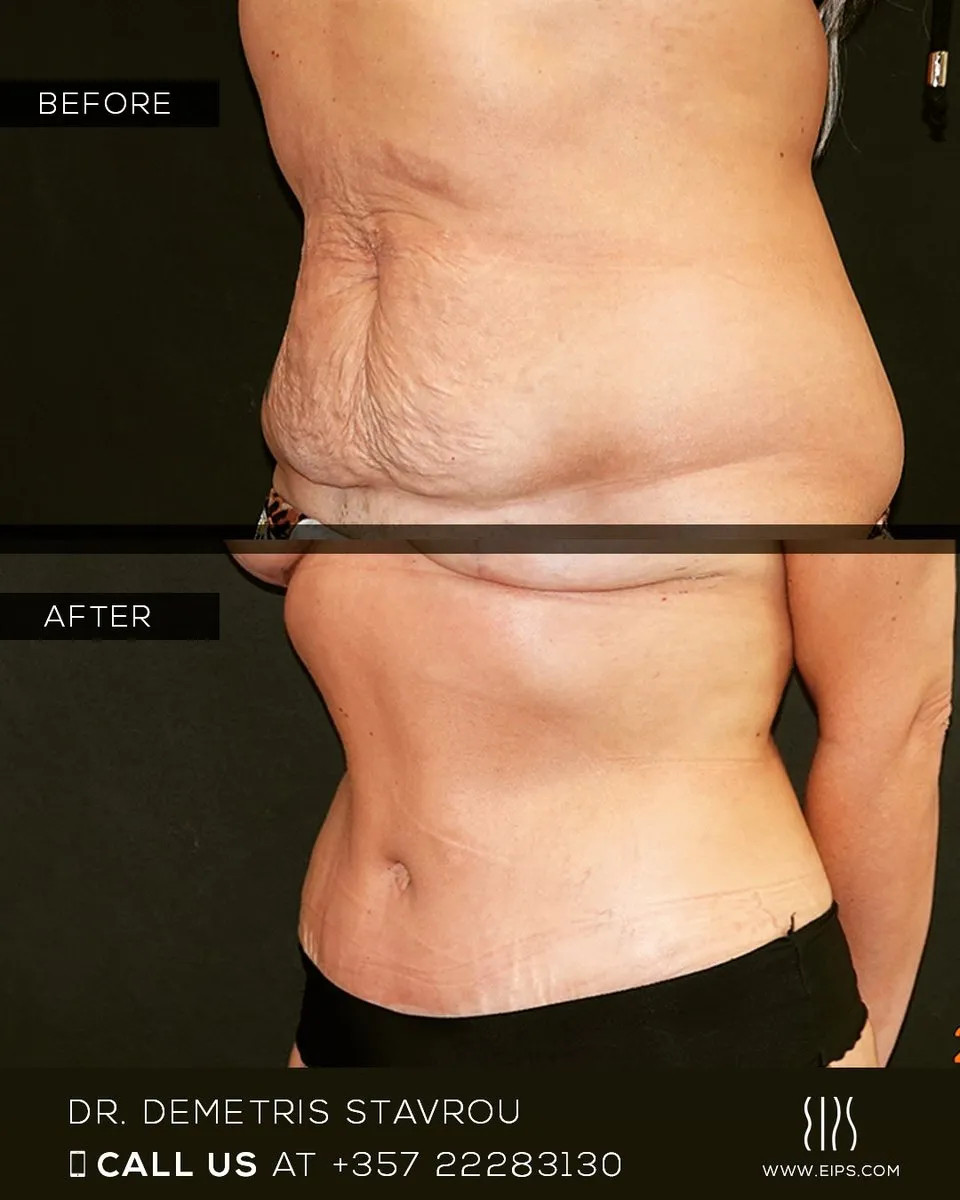
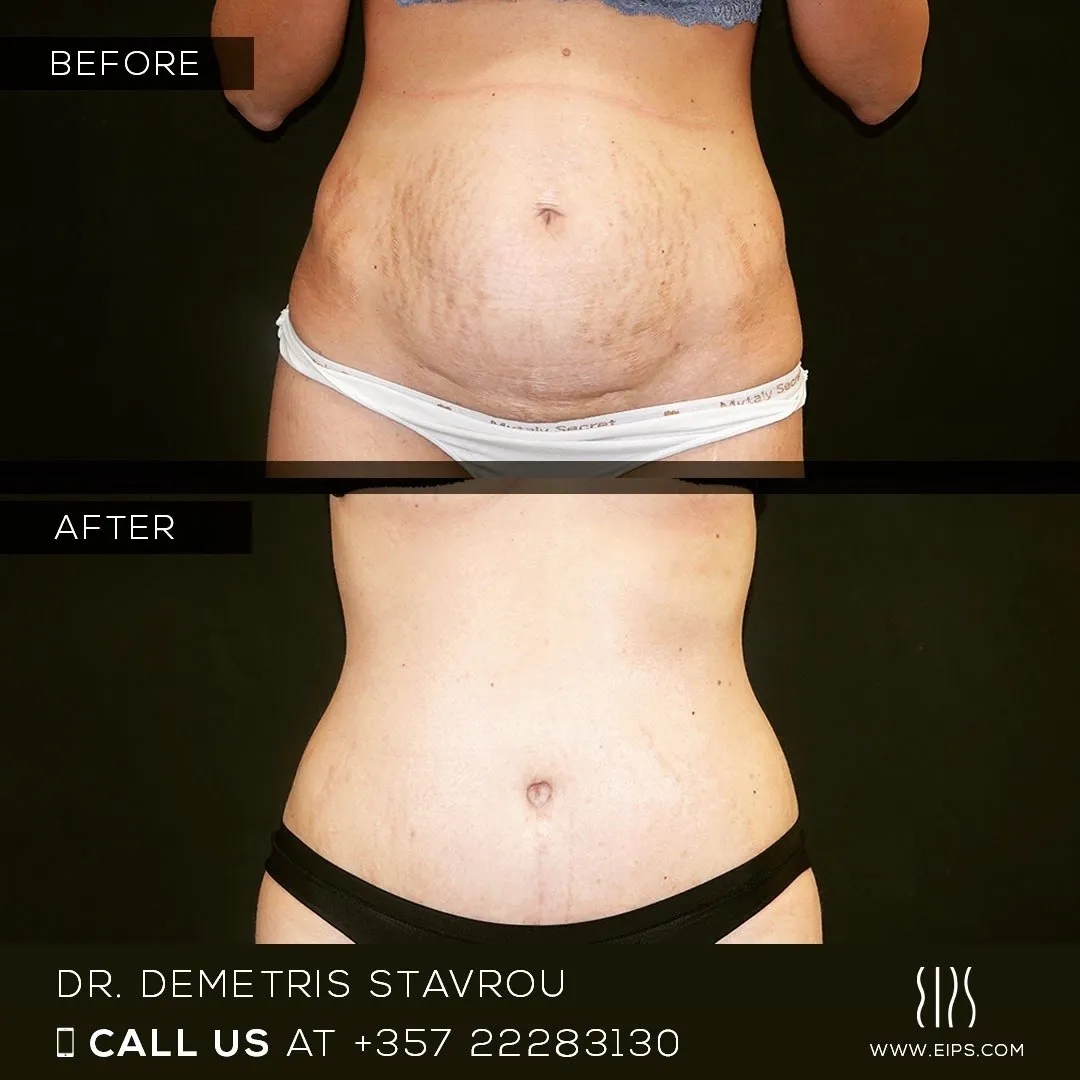
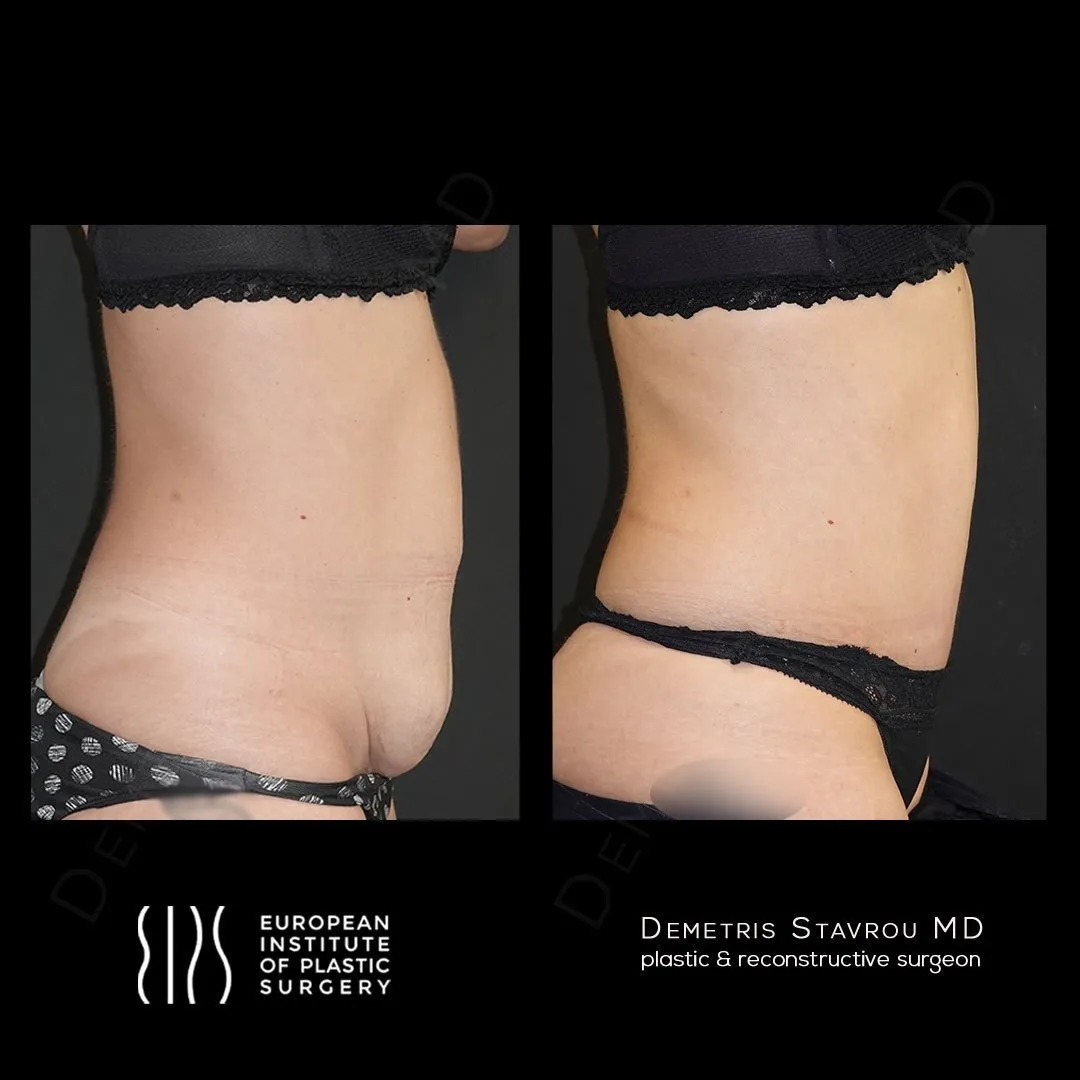
Before and after
4 cases published with the patient's written consent. These are individual results, not an average and not a guarantee.
Questions patients ask
What can I expect after the procedure?
A firmer, flatter abdominal contour that sits in better proportion with the rest of your weight and body type. The change is structural rather than cosmetic alone — the muscle repair is part of it.
What helps recovery?
Walk for twenty to thirty minutes a day to keep the circulation moving. Eat well, with adequate protein. Wear the post-operative garment you are given. Body pillows help with sleeping position. Drink plenty of water. Lymphatic drainage massage may be recommended.
Is abdominoplasty a safe procedure?
It is safe when performed by an experienced, board-certified plastic surgeon. The pre-operative and post-operative instructions given to you are specific to your case and following them is part of the safety of the operation, not an optional extra.
What exercise maintains the result?
A well-rounded routine is the most useful. For anyone not used to exercising, a thirty to sixty minute walk is a reasonable starting point, with intensity increasing over time. When to start is set by your surgeon and depends on how the repair is healing.
How long does abdominoplasty surgery take?
The operation takes two to three hours, depending on the type. A full abdominoplasty takes longer than a mini abdominoplasty.
Can I have an abdominoplasty if I am planning a pregnancy?
Women who are planning a pregnancy should postpone abdominoplasty until their family is complete. Where an abdominoplasty has already been performed, a caesarean incision falls very close to the incisions of that operation and increases the risk of complications.
Where it is performed
- Surgery in Cyprus
- The Surgery Center 3i, Strovolos
- Surgery in Athens
- Iatriko Athinon, Marousi Mediterraneo Hospital, Glyfada
Where yours takes place is agreed at the consultation.
How we quote
A quotation follows consultation, because what it costs depends on what the operation actually involves for you — the technique, the time in theatre, and whether anything is being addressed at the same time. We do not publish price lists and we do not quote before examining you.
Arranging a consultation
Book a slot in the clinic diary directly, or send the details of what you are considering and we will reply with the times we have.